


Design Feature #72
The Soul Behind a Toy, The Craft That AI Can’t Replicate
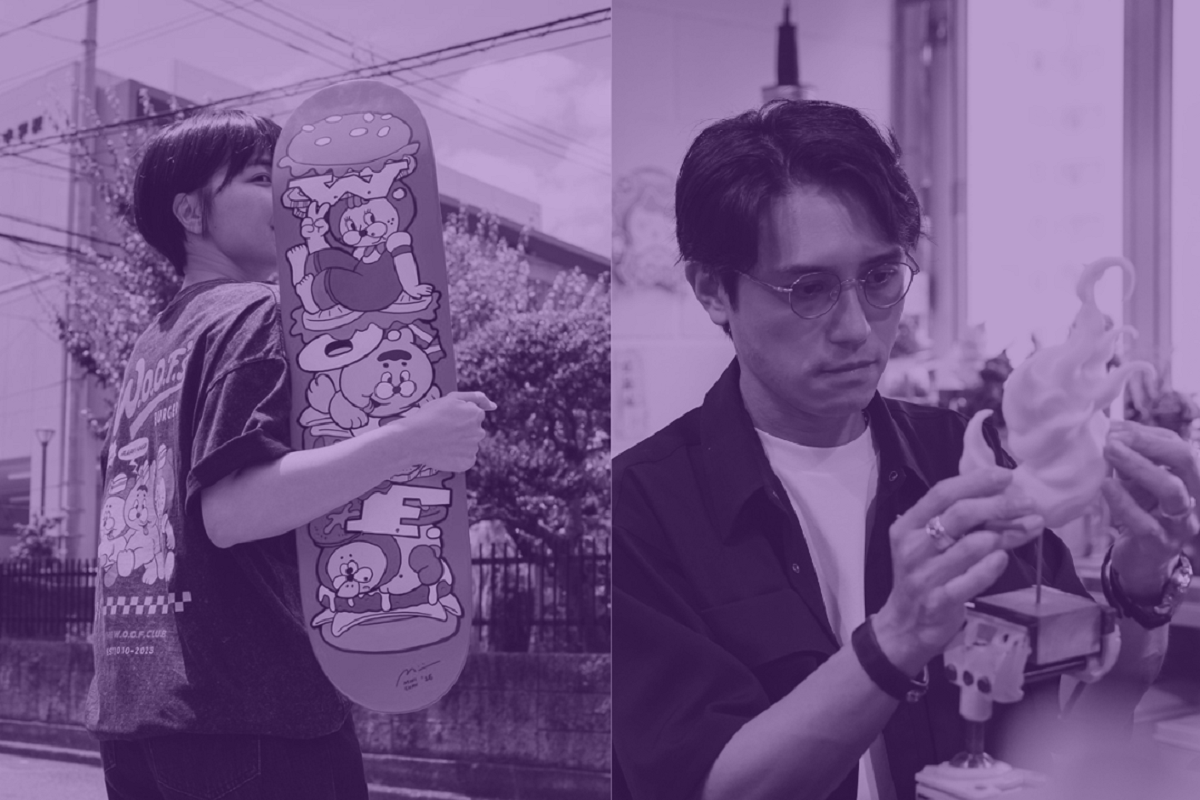
Mini Chan & Ray Wong
Text: Yasmine Yip
Images: Yasmine Yip, Photo courtesy of the interviewee
Translated by Joel Wong
When collectors pick up an exquisite designer toy—marveling at the ingenuity of its concept—few looks closely at how it was created from scratch. A toy that truly moves people takes more than a story and visual packaging to bring an idea to life; it also depends on the artisan’s skill to transform a flat concept into something tangible, cut by cut, chiseled by chisel.
Mini Chan, the lead of The W.O.O.F. Club and the driving force behind the brand’s creative vision, and Ray Wong, the sculptor who shapes the toy’s intricate framework. Though they occupy different roles, both face the same question: in an era when AI and digital fabrication are increasingly common, how can designer toys preserve the soul of handcrafted work?
Changing Course and Staying True: The Tale of Two Toy Creators’ Journeys
Armed with a degree from the University of Hong Kong's Business School and years of corporate marketing experience, Mini decided in her thirties that many considered irrational. When the pandemic brought the world to a halt, she packed her bags and moved to Japan alone to study the language and pursue her design studies.
This leap of faith led her into the worlds of illustration and art toys, culminating in the founding of The W.O.O.F. Club. Inspired by her beloved dog, she created the 2D character C.HING, marking the start of her quest to transform a graphic illustration into a physical, collectible toy.
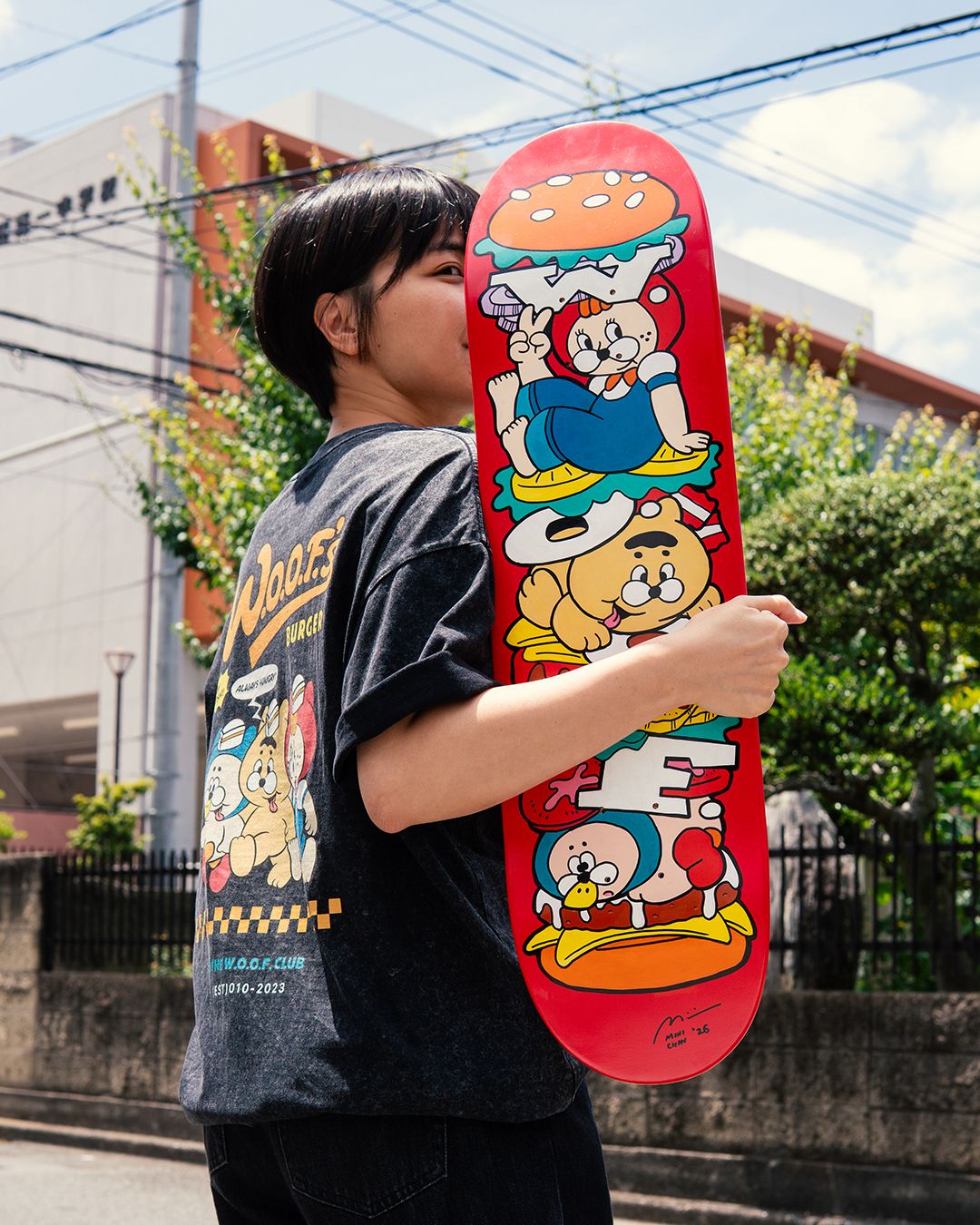
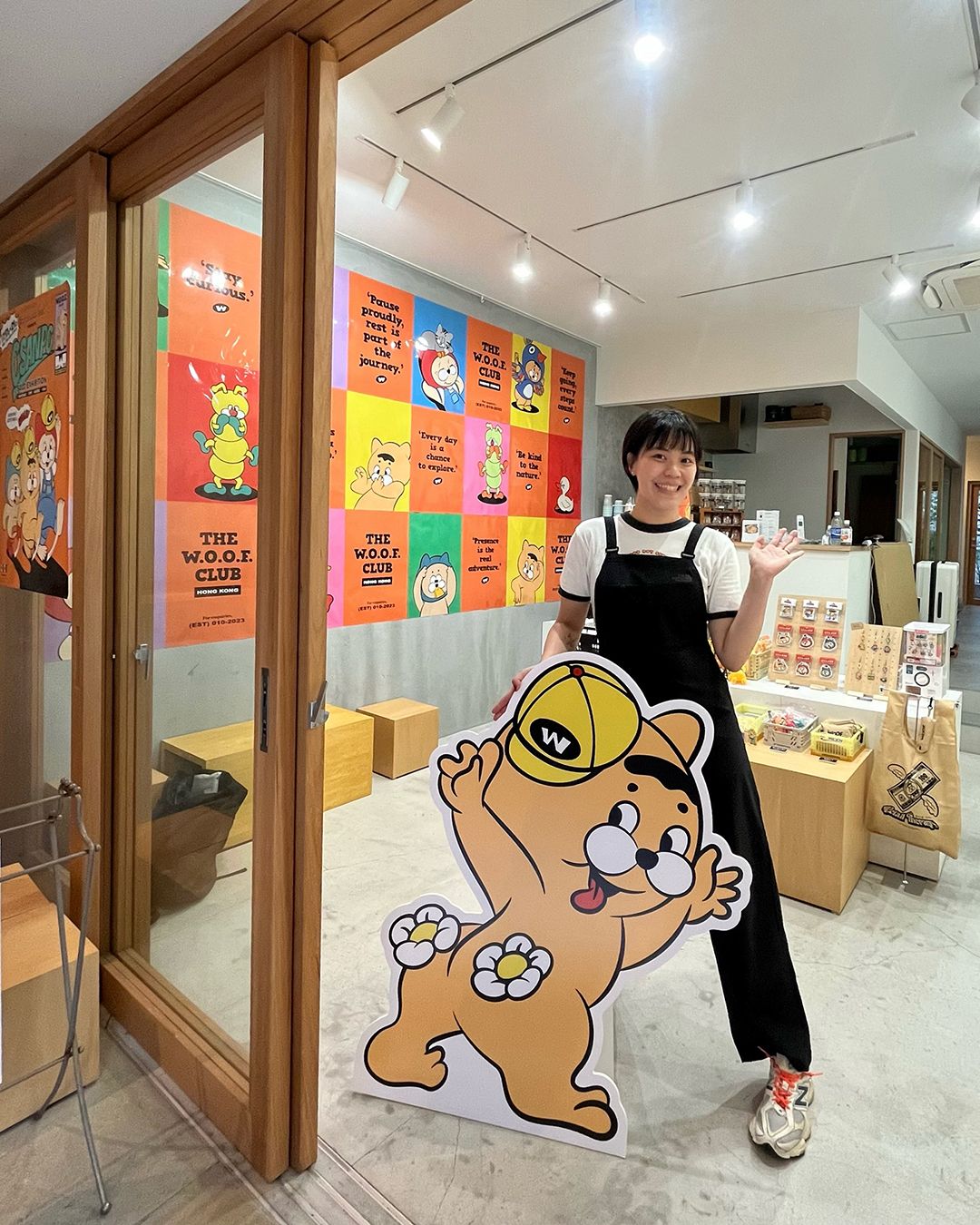
Mini left her corporate career in Hong Kong and moved to Japan alone to study design. This experience paved the way for her entry into the illustration and toy industries. After creating C.HING, a character inspired by her dog, she discovered a new universe of possibilities in turning a 2D design into a physical toy.
Sculptor Ray Wong's path was markedly different. He began teaching himself to sculpt as a teenager, then apprenticed with the renowned Chu Tat-shing. Having witnessed a quarter-century of evolution in Hong Kong’s toy industry, Ray remains patient in a world obsessed with speed. A lover of reading physical comic books and a collector of Star Wars and Saint Seiya figures, he prefers the tactile satisfaction of physical materials to virtual data and digital models.
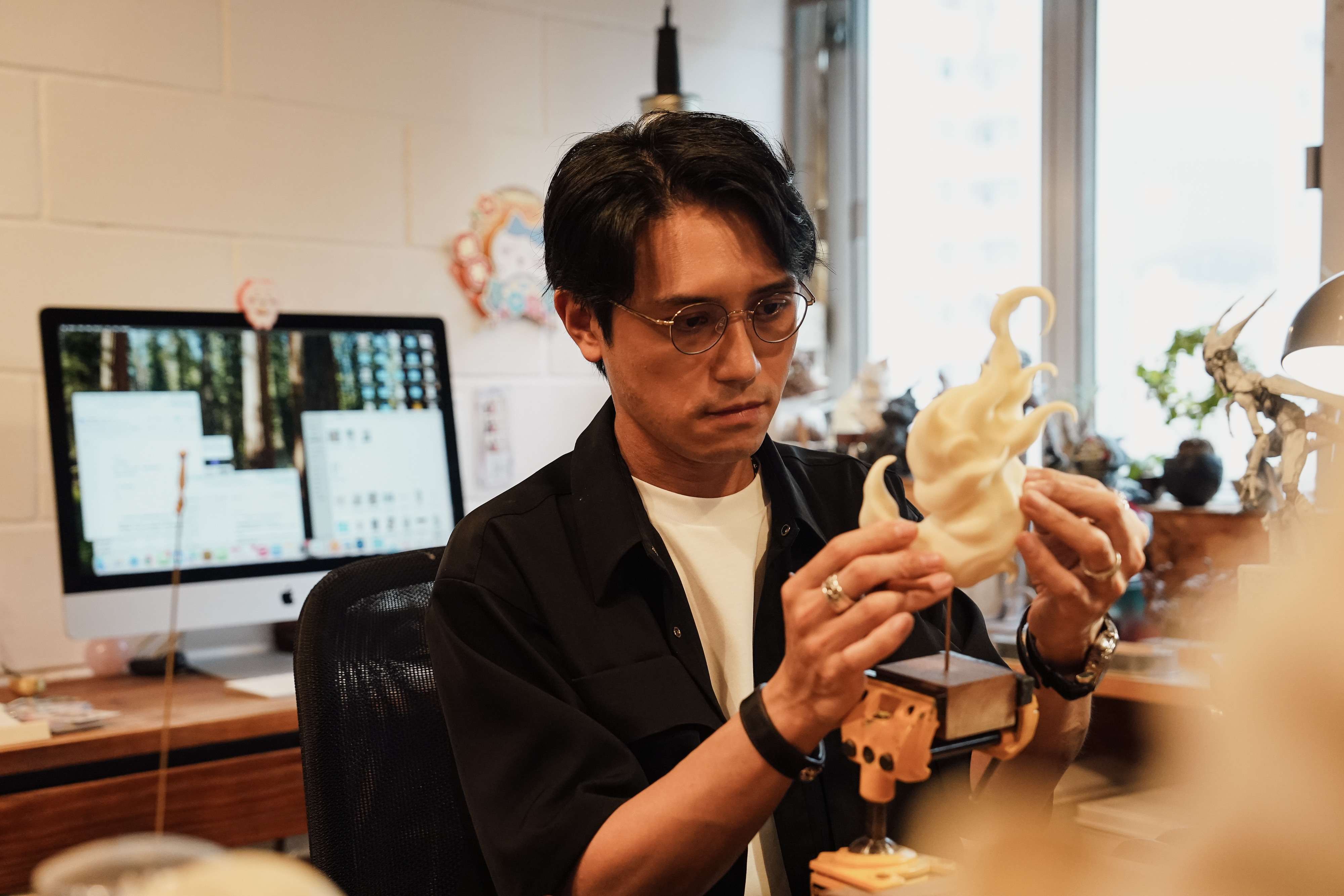
Ray Wong sculpting live at the PMQ Play Stuff Fest 2026.
When Imagination Meets the Realities
Take the latest varsity-jacket edition of C.HING, for example, which was born from a running joke. Mini laughs that people often mistake C.HING for a cat or a bear, prompting her to draw a four-panel comic in which the dog catches a ball in its mouth and earns a “Good Boy” from a referee. However, when she tried to translate this scene into a 3D object, Mini’s commercial vision collided with the practical constraints of craftsmanship—constraints Ray Wong knows all too well.
Mini initially designed an intricate, hand-drawn embroidery pattern to be printed on the figure. During production, however, she discovered that hand-painted sofubi (soft vinyl) simply cannot match the precision of an industrial assembly line. After consulting with their production partner, Vapour Park, they decided to include decals for collectors to apply themselves. This pivot added an unexpected element of interactive fun to the toy.
The experience taught Mini that toy design requires a deep understanding of form, materials, and the limitations of handmade production—often leading to delightful surprises that wouldn't happen in flat graphic design alone.
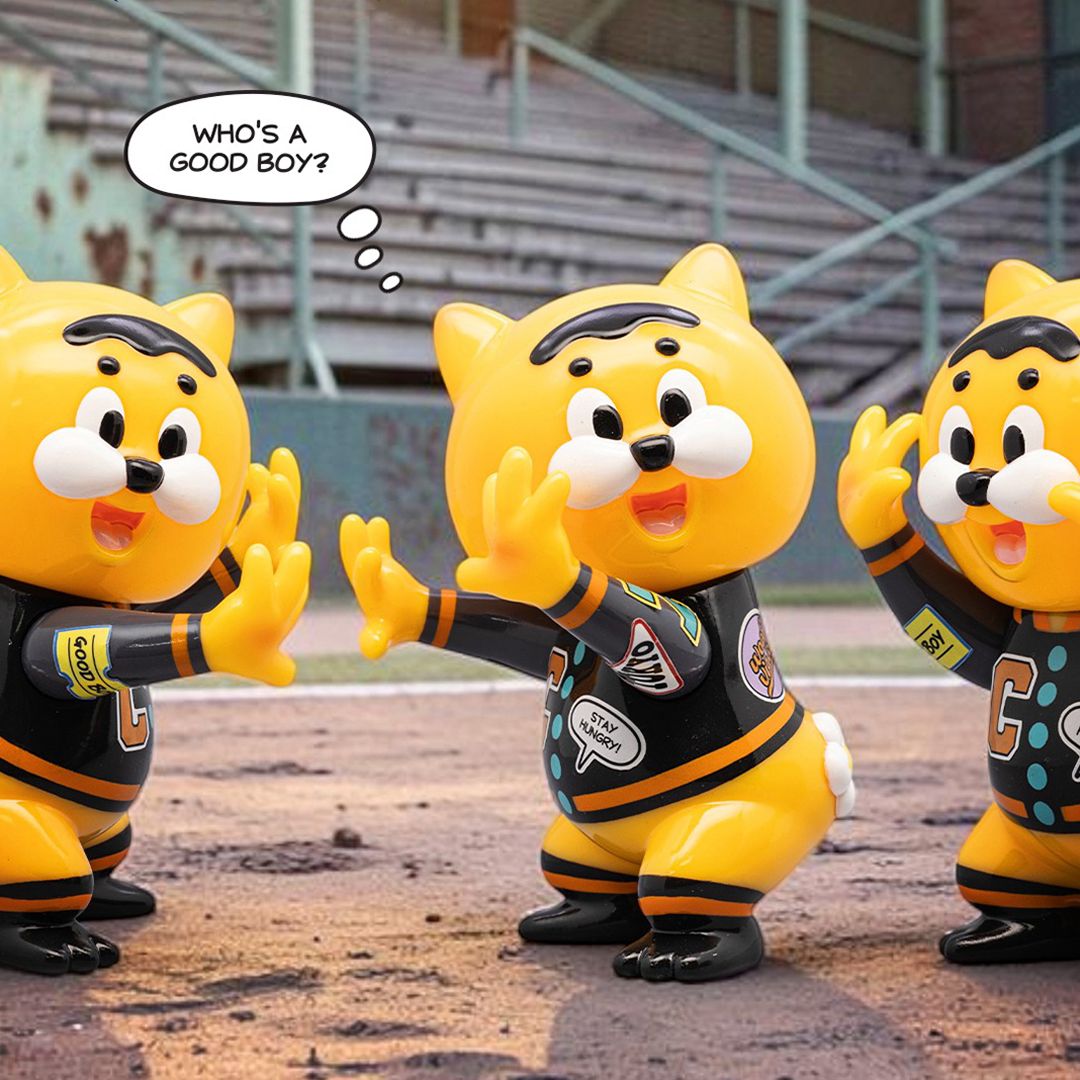
C.HING embodies Mini’s signature retro American comic style, translating the character's lighthearted, humorous, and slightly mischievous personality into sofubi.
This process gave Mini a deep appreciation for handcrafted work while highlighting a gap in consumer awareness. Although the booming popularity of art toys has attracted a wider audience, many people still struggle to distinguish between mass-produced items and independent, handmade pieces.
"Handmade molds, individually hand-painted figures, and limited production runs are all about individuality and rarity," she explains. "We need to take the time to help the public understand that."
To bridge this gap, Mini draws on her marketing background to craft the brand's narrative. In an era dominated by ever-changing algorithms, she no longer posts only polished photos of the finished product on social media. Instead, she uses Reels to share behind-the-scenes glimpses of her creative process. By letting her audience see the story, the effort, and the tactile nature of the work first, they gradually come to understand its true value. For Mini, brand building goes beyond cultivating a sleek image; it’s about forging an emotional connection through creation.
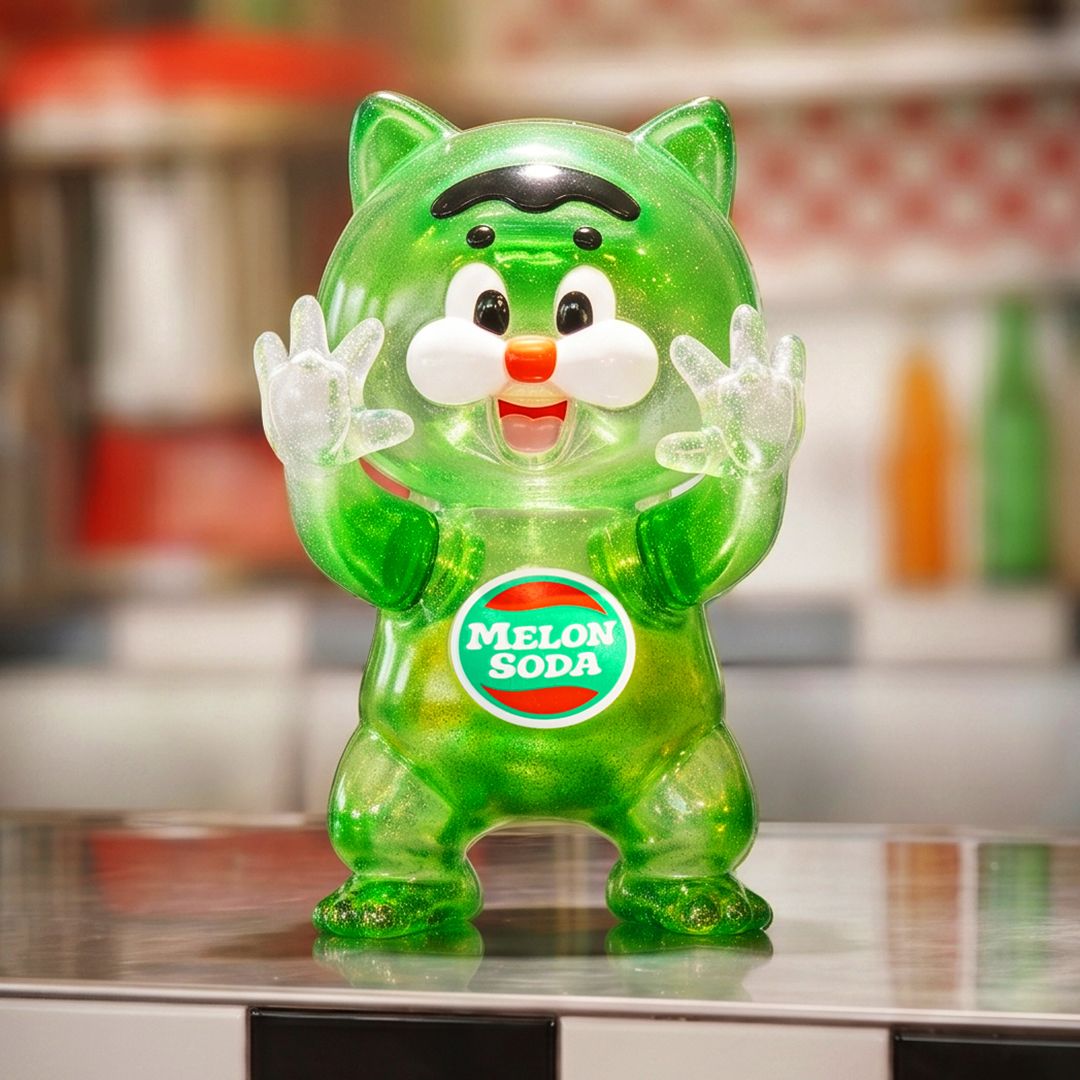
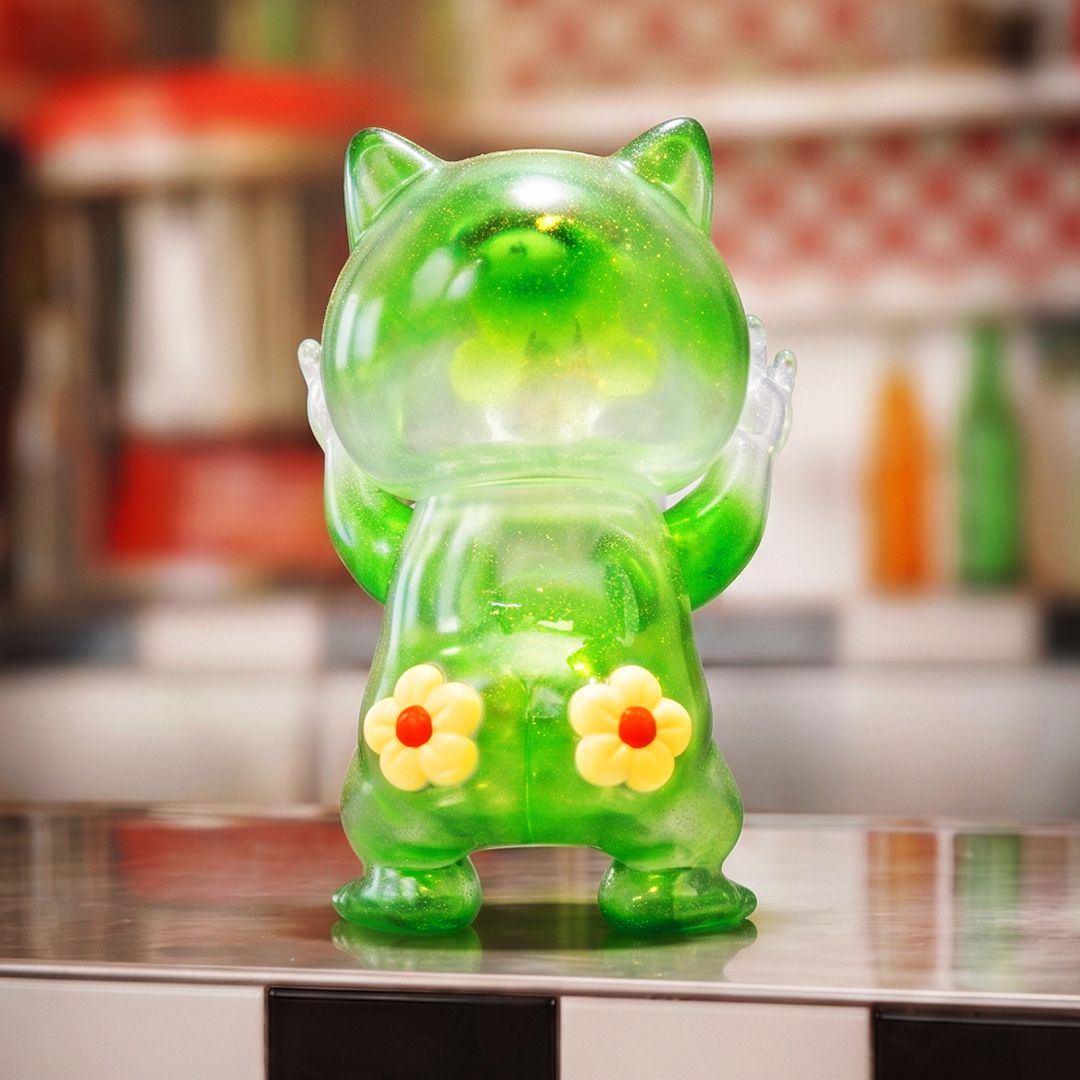
Fitting the American fast-food theme of the PMQ Play Stuff Fest 2026, Mini gave C.HING a playful makeover as “Soda Boy.” Cast in transparent glitter sofubi for the first time, Soda Boy represents yet another unexpected creative avenue that opened up once Mini entered the art toy scene.
No Algorithm Can Replicate the Human Touch
In today’s era of digital modeling, when most people assume a prototype is 3D-printed, Ray Wong remains fiercely committed to documenting his entirely handmade process on Instagram. He even explicitly labels his work as “handmade at On Scale.” Ray believes that while technology certainly boosts efficiency, overreliance on it strips a piece of its individuality, resulting in formulaic, cookie-cutter designs.
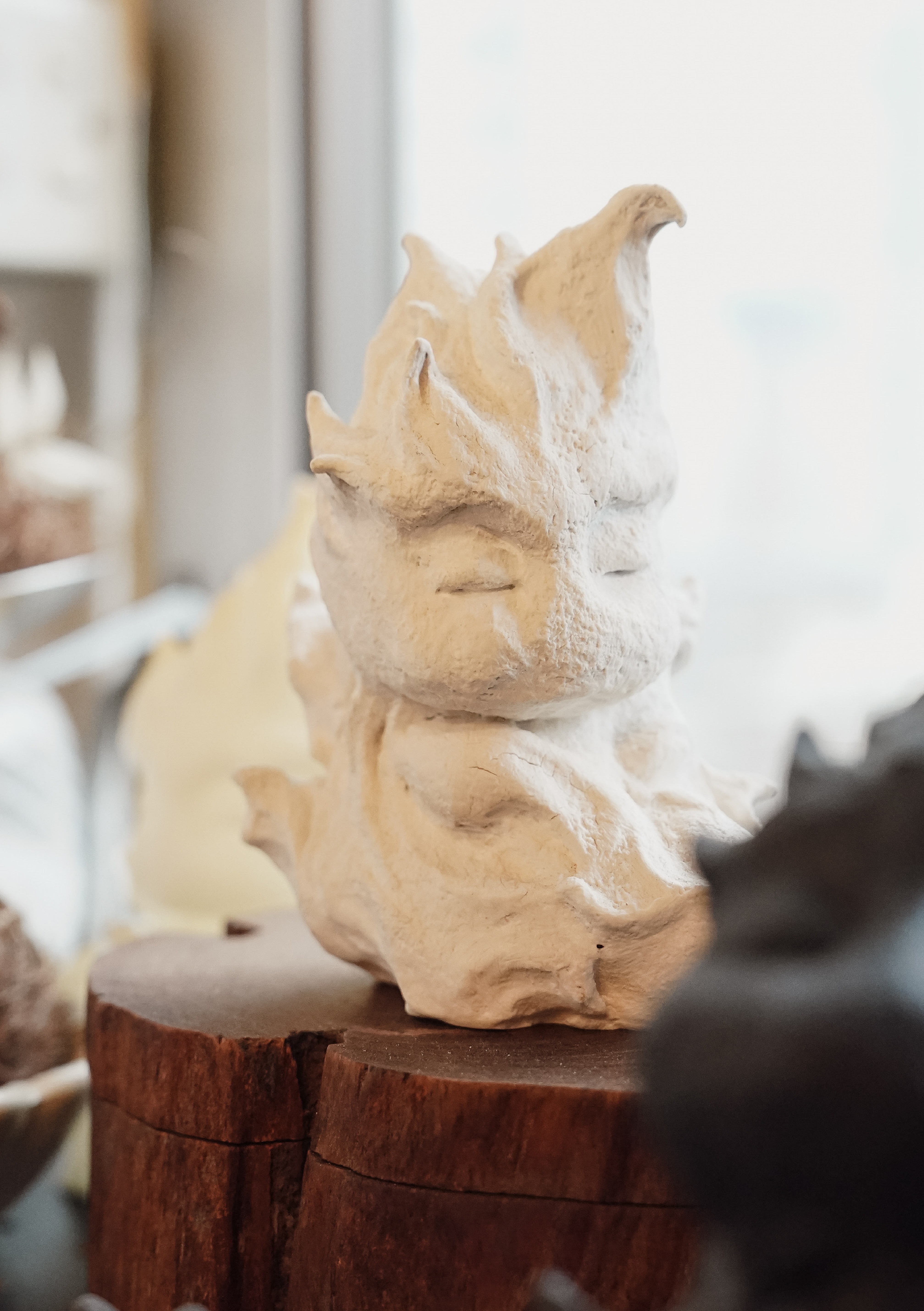
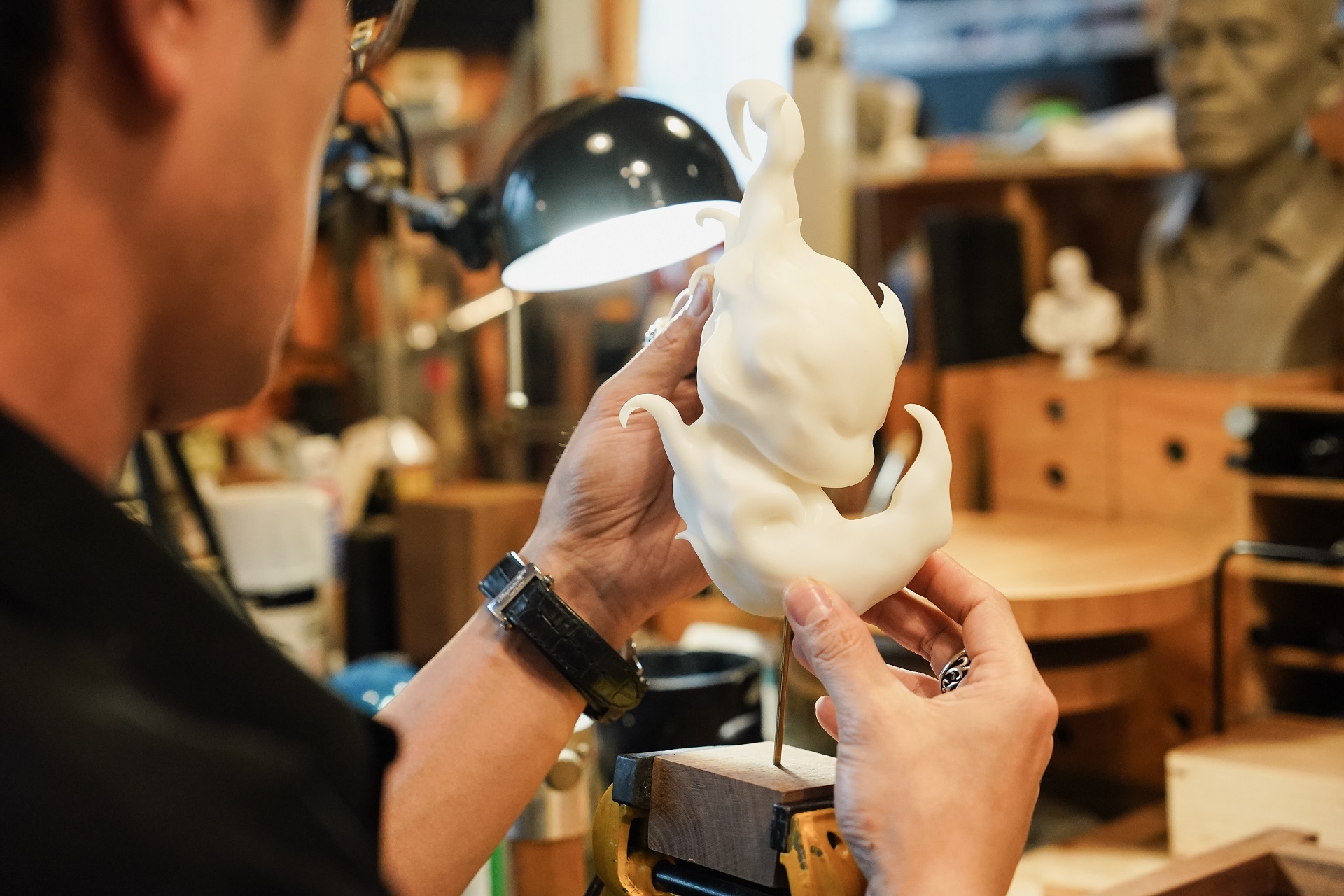
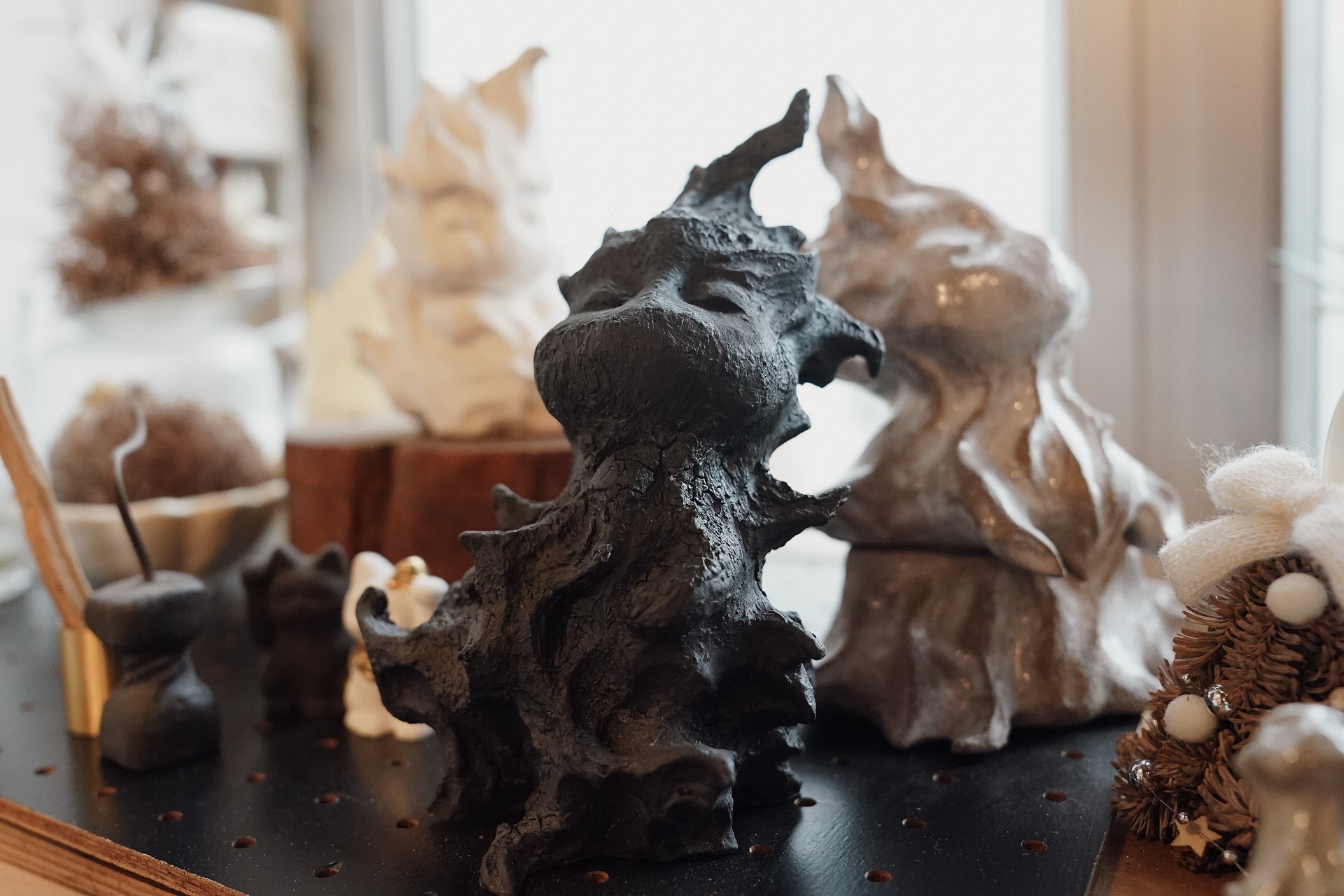
"There are countless ready-made 3D files available to download online," he notes. "So why start from scratch and sculpt by hand? Because the process matters."
This conviction stems from his core understanding of what it means to create. As AI has become increasingly ubiquitous, the human touch and the distinct marks left by every cut and chisel stroke in a hand-sculpted piece only underscore the artist’s unique value.
In an age when trends rise and fall overnight and algorithm-driven exposure is notoriously fickle, Ray admits that navigating the current creative landscape is more challenging than ever. Yet his advice to the younger generation of creators remains remarkably simple.
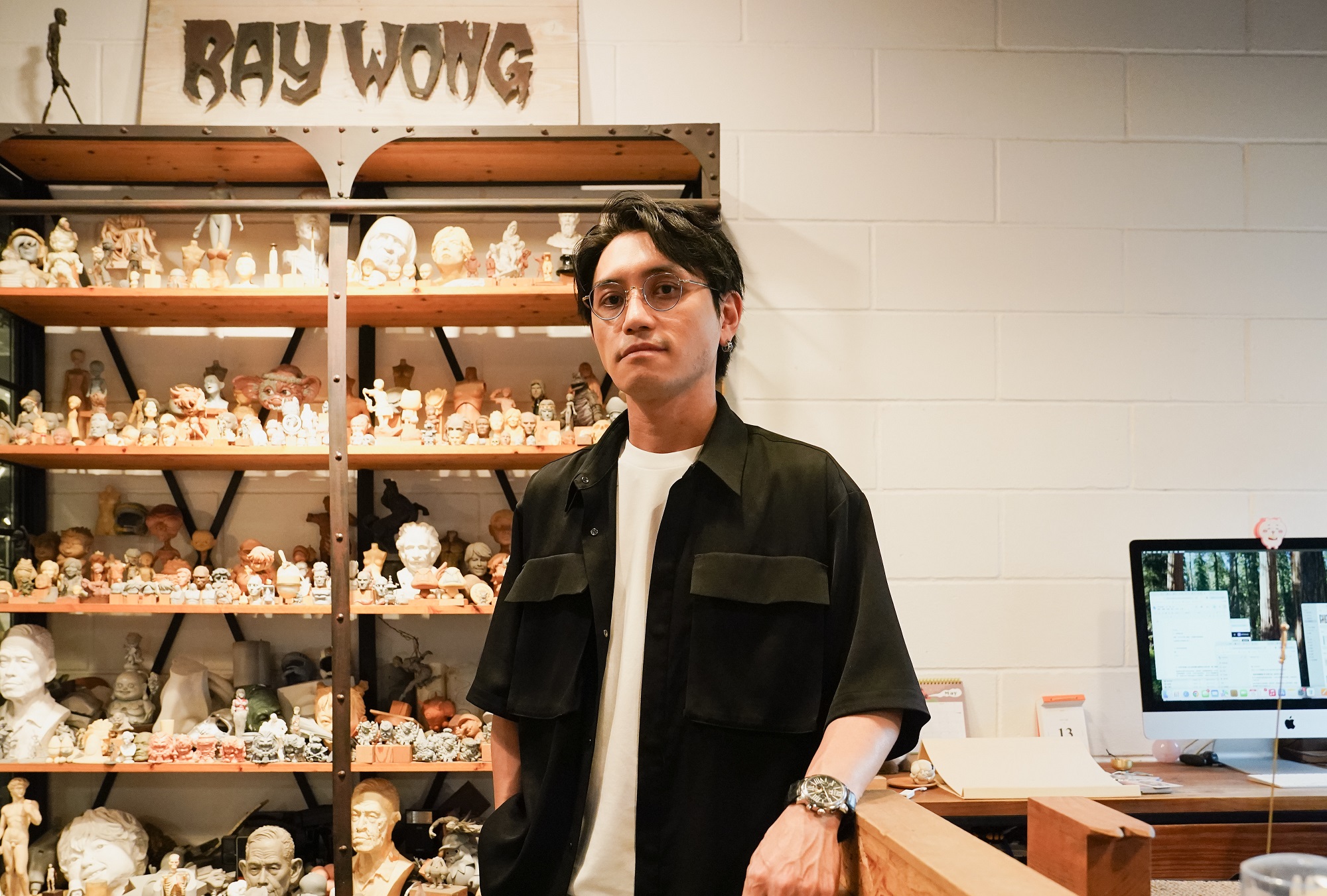
"It might sound cliché, but you really have to stay true to yourself. The one thing that cannot be replaced is your ideas—the stories and concepts you want to express."
When discussing his hand-sculpting workshops, Ray laughs, insisting he isn't driven by a sense of historical responsibility, nor does he teach merely to expand his influence. Deep down, however, he admits he simply wants to preserve such handcraft skills.
He emphasizes that he isn't opposed to the conveniences of modern technology. Still, whenever he crosses paths with fellow makers equally dedicated to traditional handcrafting, he feels a profound sense of mutual respect because he knows exactly how difficult it is.
In a city like Hong Kong, where speed and efficiency are the key, these two creators have remained true to their principles, painstakingly building their own toy universes. This dedication is the soul of Hong Kong’s designer toy scene in the age of AI; no algorithm could ever replicate the human touch.