
Design Feature #73
Mind the gap: Narrative Philosophy and Spatial Grammar in Picture Books
Benny Lau & Michelle Chan
Text: Cheung Man Ho
Image: PMQ
Translated by Mona Chu
“The meaning of a picture book lies neither in the words nor the images, but in the space between. This renders room for readers to step in and complete the story.” This is how Lau Siu Tsang (Benny), a designer and picture-book creator, defines the essence of a picture book.
Picture books must not be reduced to a textual narrative supplemented by decorative illustrations. They are a unique art form, born from the interplay of literary narrative and visual syntax.
PMQ invited Dr. Chan Chi Ying Michelle, Assistant Professor in the Department of English Language and Literature at Hong Kong Shue Yan University, and Benny to engage in a cross-disciplinary dialogue that explores the boundless possibilities of contemporary picture books, spanning their physical structure, form, and social discourse.
“Show, Don’t Tell”: The Visual Language
At the creative core of picture books, you will find a vibrant tug-of-war between text and image. “Very often, in a picture book, the words tell one story, and the images tell another. Together, they spark a third story, with double or even triple layer of meaning.” Michelle further explained.
“Images encompass a rich set of visual elements. Composition, colour, and even vector are all part of the intricate visual grammar. By contrast, words act as the anchor that prevents readers from drowning in the vastness of imagery.”

Michelle believes that there are no limits to what a picture book can explore. The visual language can tackle anything from seemingly dry math problems to complex social issues.
Speaking from the perspective of a creator and designer, Benny responded, “Visual storytellers pursue the aesthetics of ‘show, don’t tell’, the art of leaving things unspoken. I avoid verbally explicating everything because it confines the reader to a predetermined interpretation.”
Benny related to the work of this year’s Astrid Lindgren Memorial Award laureate, Jon Klassen, whose words and illustrations may appear simple and understated, yet through carefully orchestrated contrasts between text and image, cut-outs, and the simple act of page-turning, he tactfully opens up room for readers to interpret the story.

Benny values negative space, deliberately leaving room for interpretation within the picture book, allowing readers to piece together the story and read the emotions between the lines.
Beyond the 2D Page: The Book as a Narrative Stage
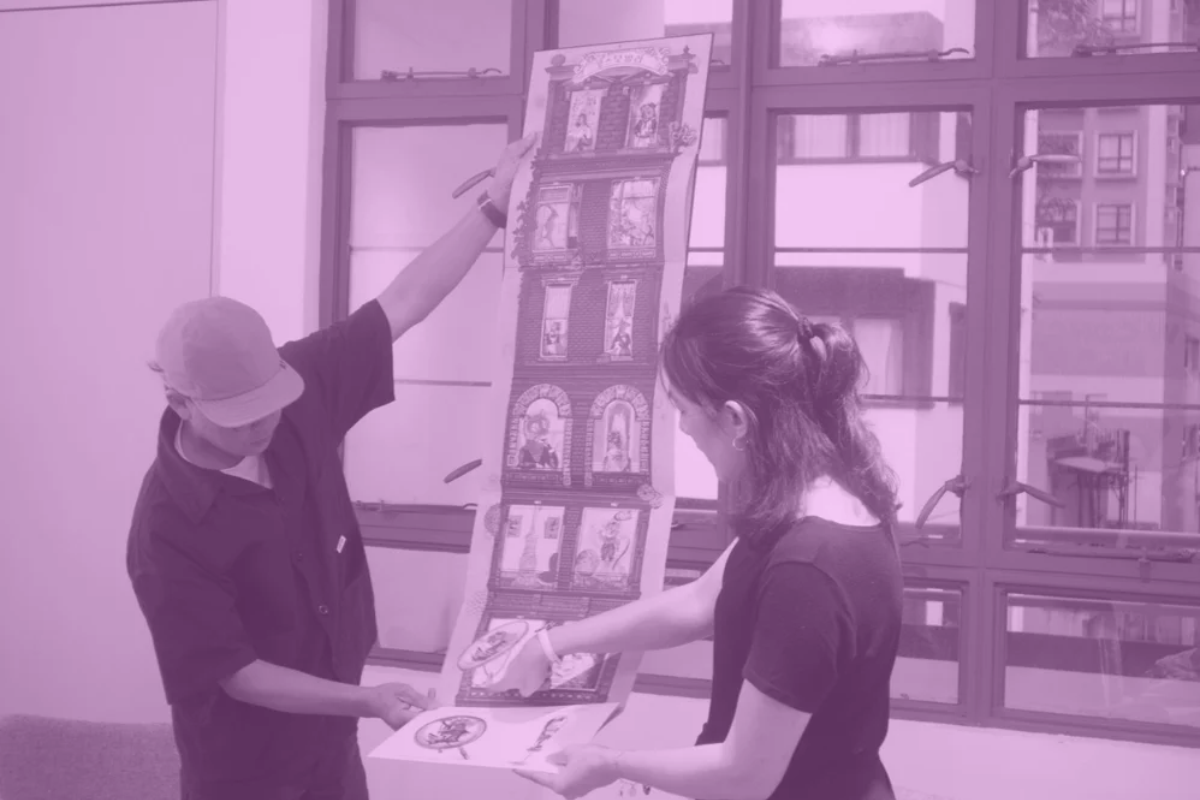
At the dialogue venue, a range of pop-up and concept books that diverge from conventional formats are on display. From scrolls and accordion-fold to immersive 360-degree panoramas, the collection reveals that the physical form of a book has never been a mere promotional gimmick. Rather, it is a key narrative agent shaping both temporal progression and reading rhythm.
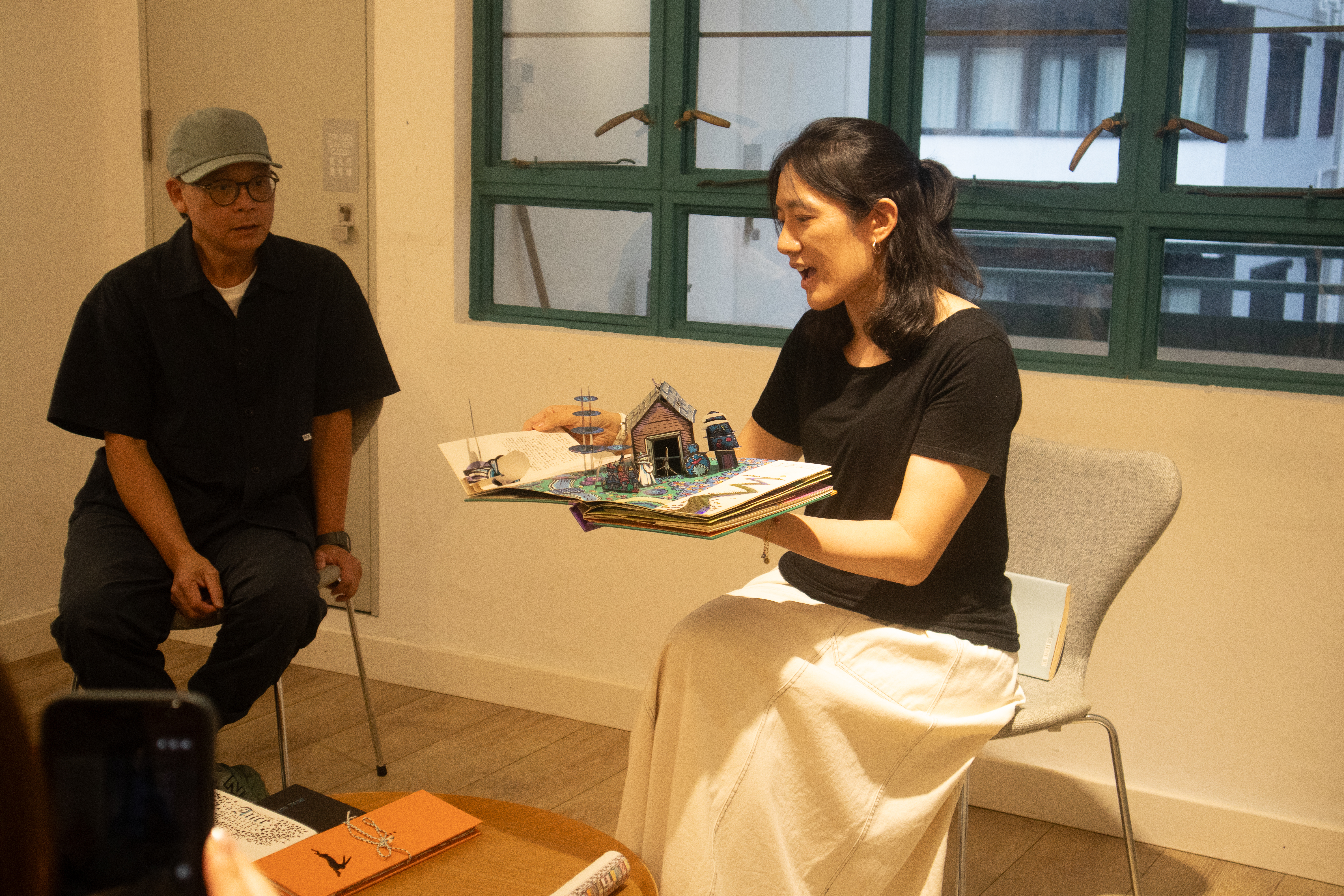
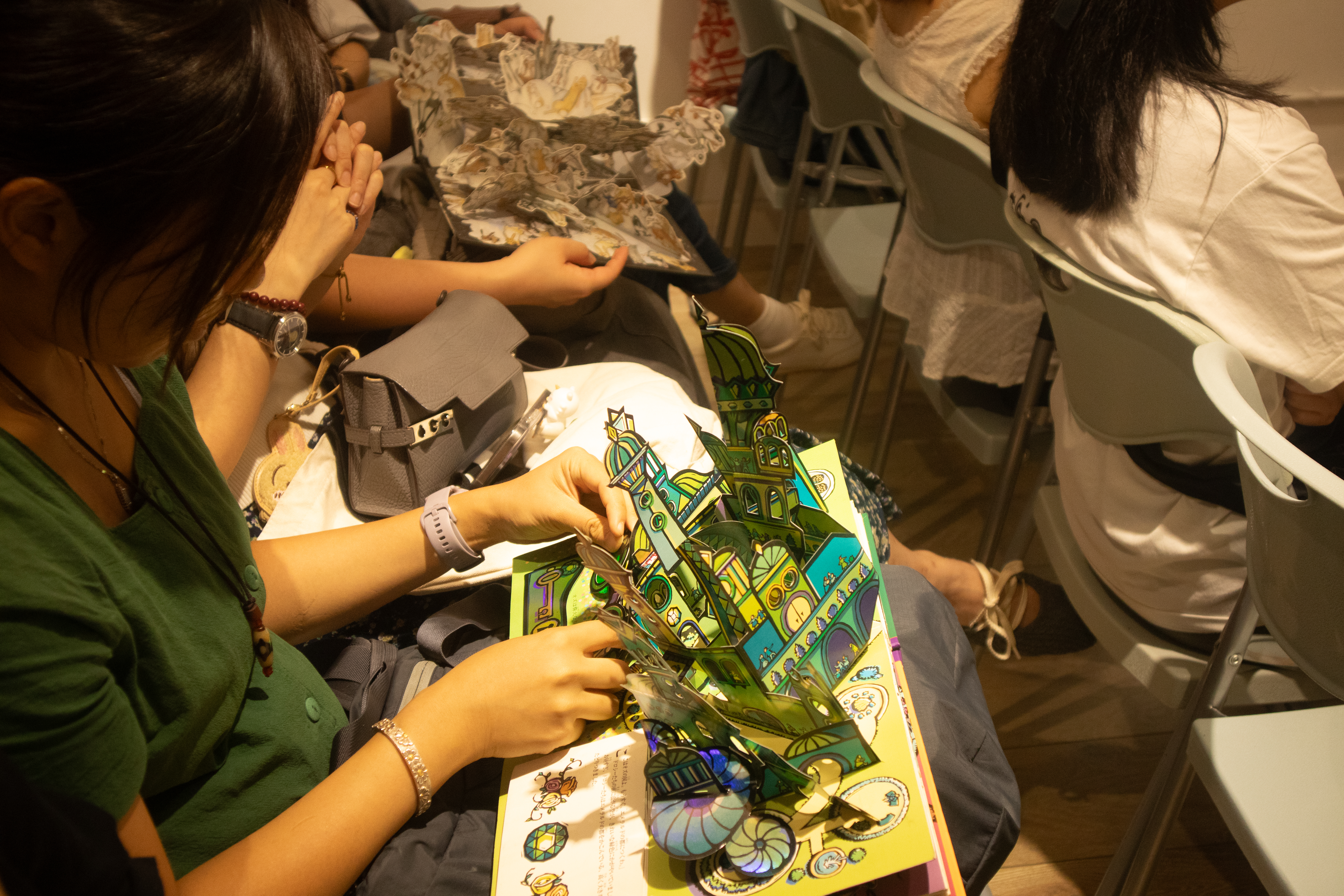
A classic pop-up book《オズの魔法使い(とびだししかけえほん)》(The Wonderful Wizard of Oz: A Commemorative Pop-up)
Collectively, paper thickness, the touch of warm and smooth fabric, structural die-cuts and folds transform reading into a three-dimensional and multi-sensory space exploration, resonating deeply with readers. As seen in the works of Bruno Munari and Suzy Lee, even the book spine plays a narrative role. It functions not merely as a spatial boundary, but as a pivotal turning point within the narrative arc.
Michelle opened and removed the dust jacket of Mulan, as if unfolding the character’s dual identity and revealing the woman beneath her masculine attire. Another book, Where Is My Home?, was passed around the audience. As warmth was applied, the polar creatures at their fingertips melted away on the page. Using heat-sensitive pigments, the picture book illustrates its ecological message in a powerful, sensory way.

Once the disguise of the dust jacket is removed, readers can see the truth beneath without explication.

As the glacier disappears in the palm of the reader, the book prompts us to reflect on global warming and our shared responsibility.
The Extended Life of Picture Books and Their Role in Social Dialogue
“Publication is not the end; it is the beginning,” Benny emphasised.
Once a picture book has been printed, its cultural life begins through author-guided readings, workshops, and shared reading experiences. Drawing on developments in Taiwan and South Korea, he explained that picture books have increasingly expanded into the social design realm, fostering community dialogue, preserving local culture, and giving voice to the marginalised.
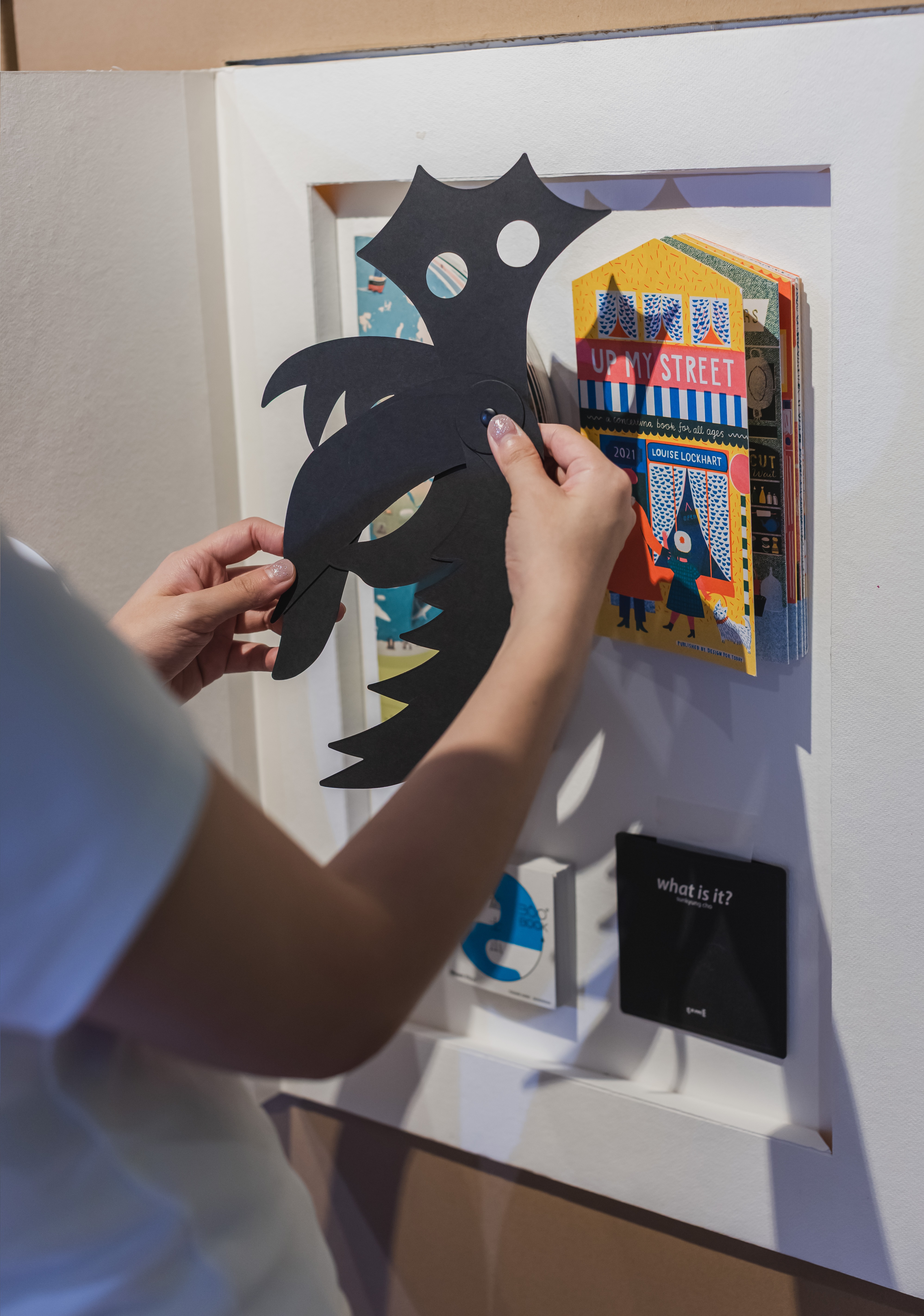
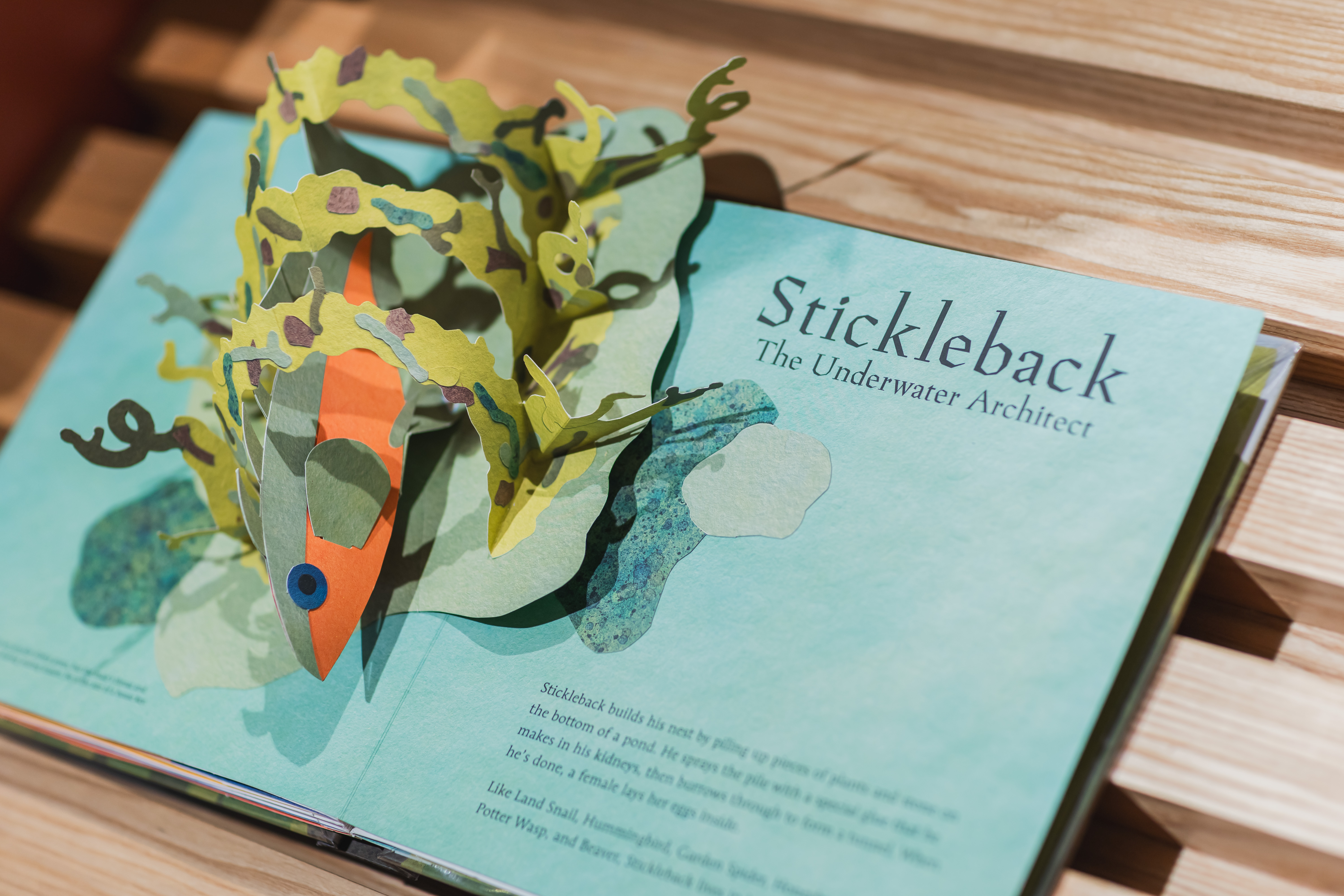
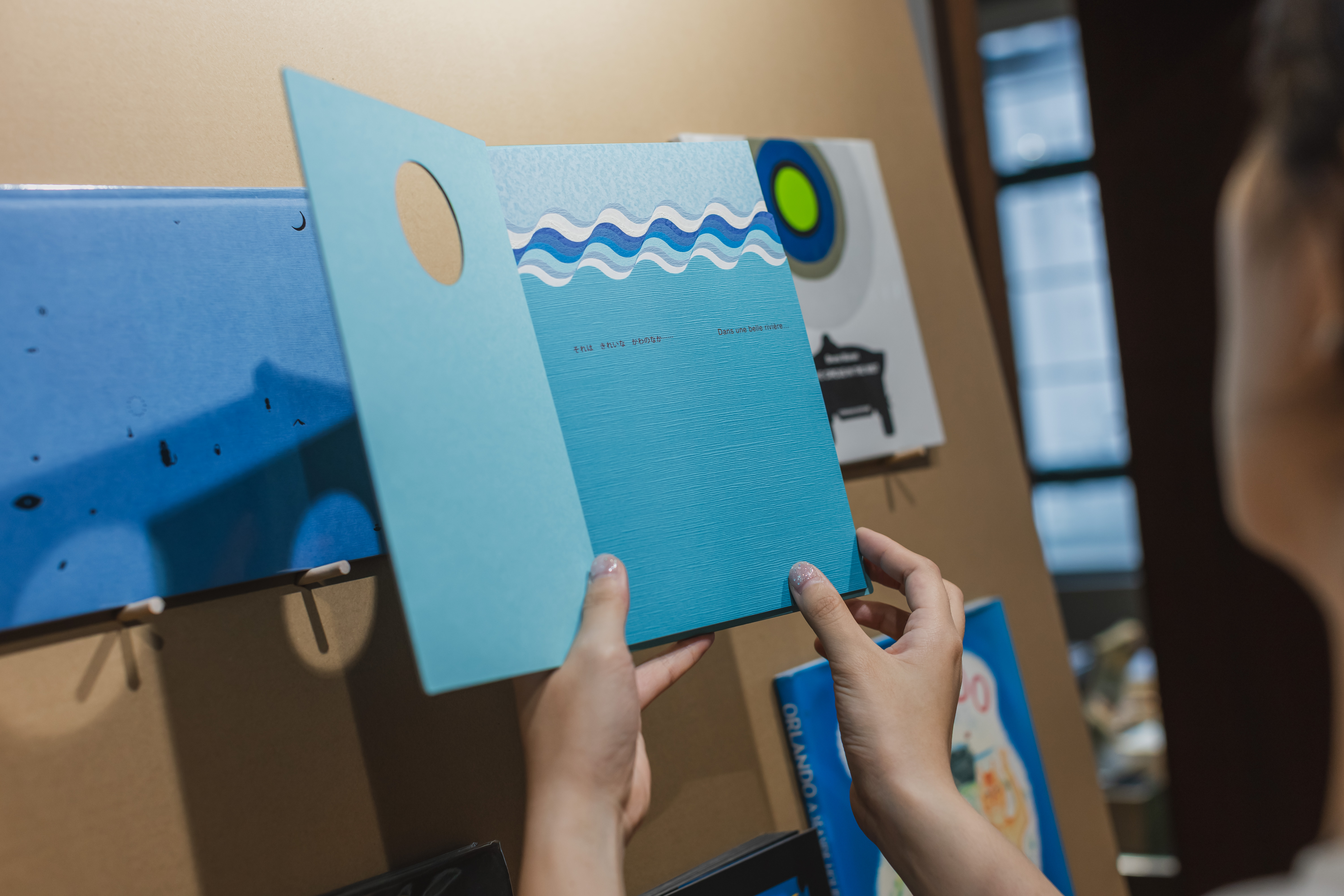
Looking back, the picture-book landscape in Hong Kong has considerably evolved. Past publications like Children Paradise and Cotton Tree Children's Literature Magazine have established an early tradition of children’s literature. Local creators have recently gained global recognition. In parallel, readers have also become more receptive to picture books designed for adults and those with deep philosophical themes. These developments illustrate the growing diversity and vitality of Hong Kong’s picture-book culture.
To keep expanding the possibilities of picture books, the Picture Book Library offers a regular space for readers to explore. The project "START FROM HERE" will engage five local picture-book creative units as curators throughout the year. Their varied approaches in curation, book selection, and spatial transformation will highlight the diverse aesthetics of picture books, maintaining an ongoing platform for creator-reader dialogues.