

PMQ Corner #48
Has AI stolen creativity?
Anita Lam & Eddy Hui & Keith Lam
Text: TL
Images: PMQ, Photo courtesy of Anita Lam, Eddy Hui and Keith Lam
Translation: Mona Chu
In the age of artificial intelligence (AI), everyone and anyone can become a content creator. Rather than worrying about AI replacing us, we might as well learn how to make good use of it.
This year’s theme for PMQ Seed is resilience. By integrating AI into education, our activities encourage students to engage in a regular process of trial and error, and nurture their experimentalism. HKDA Vice-Chairman Mr. Eddy Hui hosted the sharing session of the PMQ Seed Train the Trainer workshop series, exchanging his views on AI and artistic creation with Keith Lam, co-founder of Dimension Plus, an arts and technology team, and Anita Lam, curator of Artists who Love Animals and Nature (ALAN) art collective.
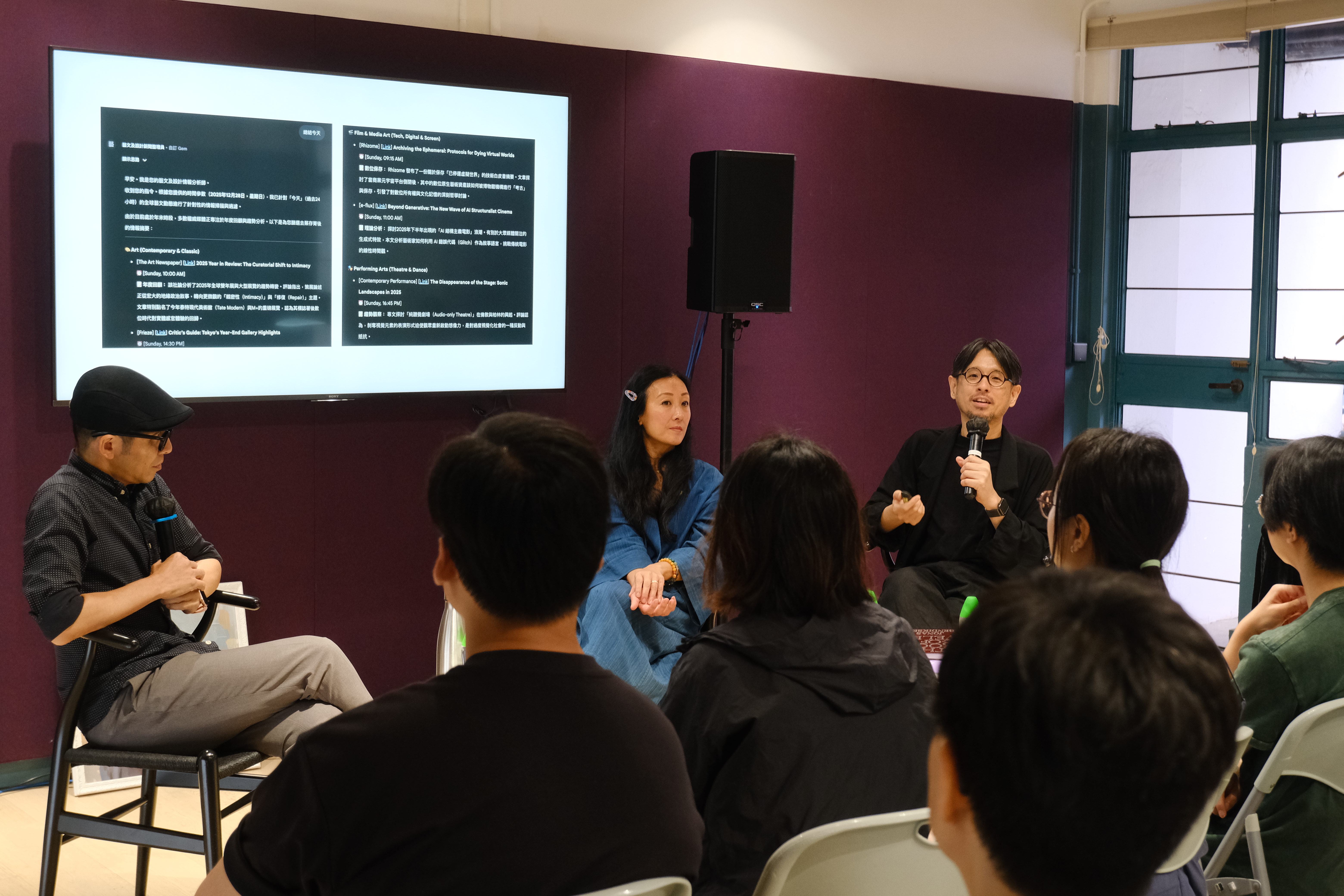
Keith Lam, Anita Lam and Eddy Hui (from right to left) were invited to the PMQ Seed's sharing session from the Train the Trainer Workshop Series, to discuss the possibilities of incorporating AI into creations.
AI as a creative field
Anita is the curator of the ALAN art collective. She is passionate about combining art and technology to evoke the public’s love for animals.
At the sharing session, she said that many projects from ALAN use AI. Anita offered two main perspectives, “First of all, AI is a tool of creation, lowering the barrier to creating. This is precisely why human creative ideas are still the most important. Secondly, AI itself is a creative field, meaning some experiences cannot be realised without AI.”
Anita cited the AI orangutan "Friska", created by ALAN in 2024, as an example of AI as a creative field. "We weren’t able to create talking animals before. With chatbots, we can now give it a try."
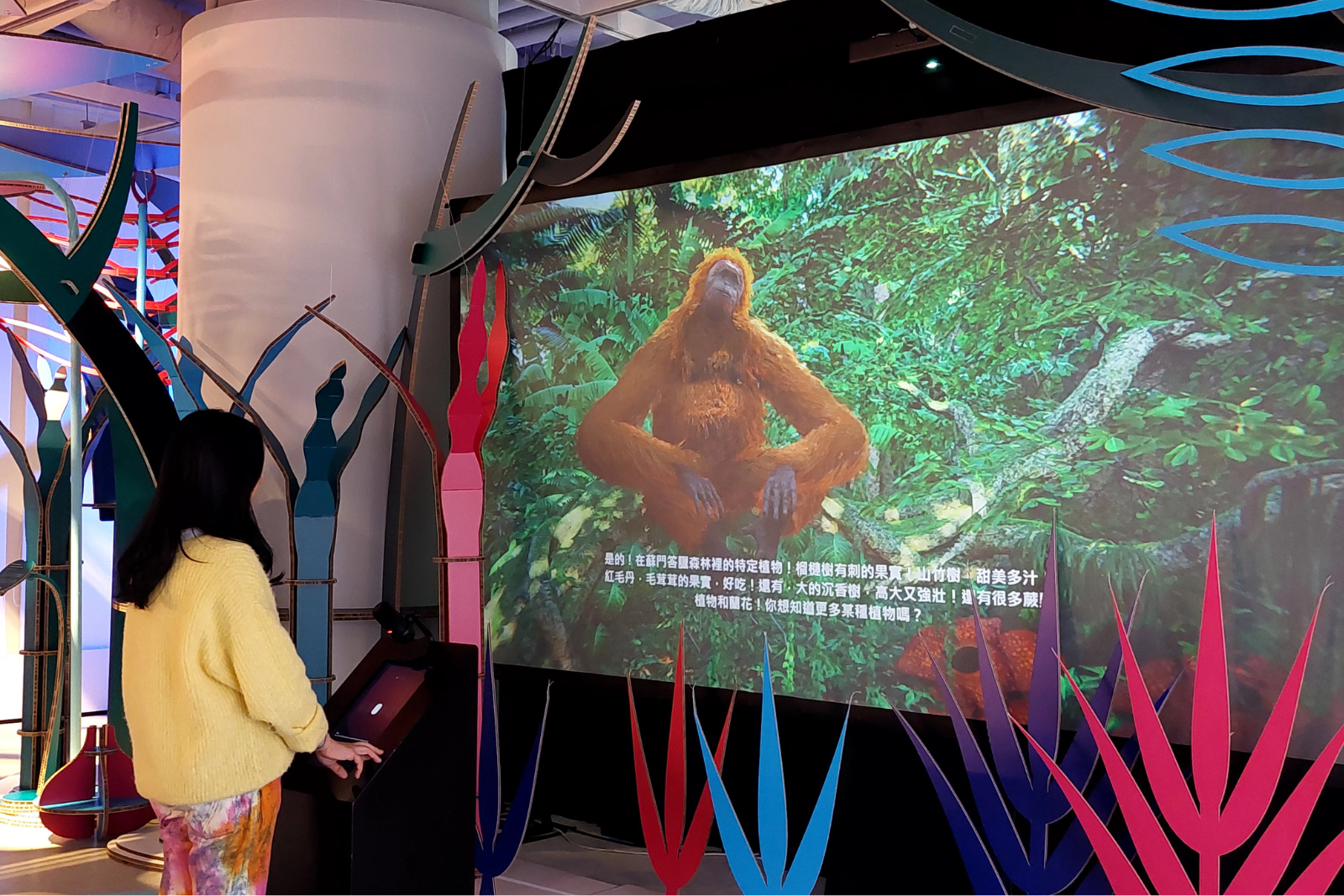
"Would that create more sympathy among us towards the orangutans?"
(Photo courtesy of Anita Lam)
Friska uses a real orangutan from the forests of Sumatra in Indonesia as its prototype. Local scientists who have researched orangutans for more than two decades provided an enormous database informing the AI generation process. Friska is an interactive installation, capable of conversing with humans. Anita joked, “Some participants were impolite towards Friska in an exhibition; Friska learnt to talk back and get angry.”
Human Safeguards and AI biases
Eddy is a multimedia designer, bringing more than 20 years of experience in advertising and media. In addition to teaching at multiple universities, he attends seminars regularly, sharing his experience with the use of AI.
Eddy talked about his collaboration project with local temples, developing an AI bot that distinguishes the dynasty and sect of different Buddha statues. “This project was initiated by humans. Its process involves designers, specialists on Buddha statues, and AI. At the end, the most challenging parts such as screening and critical reasoning are still done manually. Humans’ role as initiator and gatekeeper is important.”
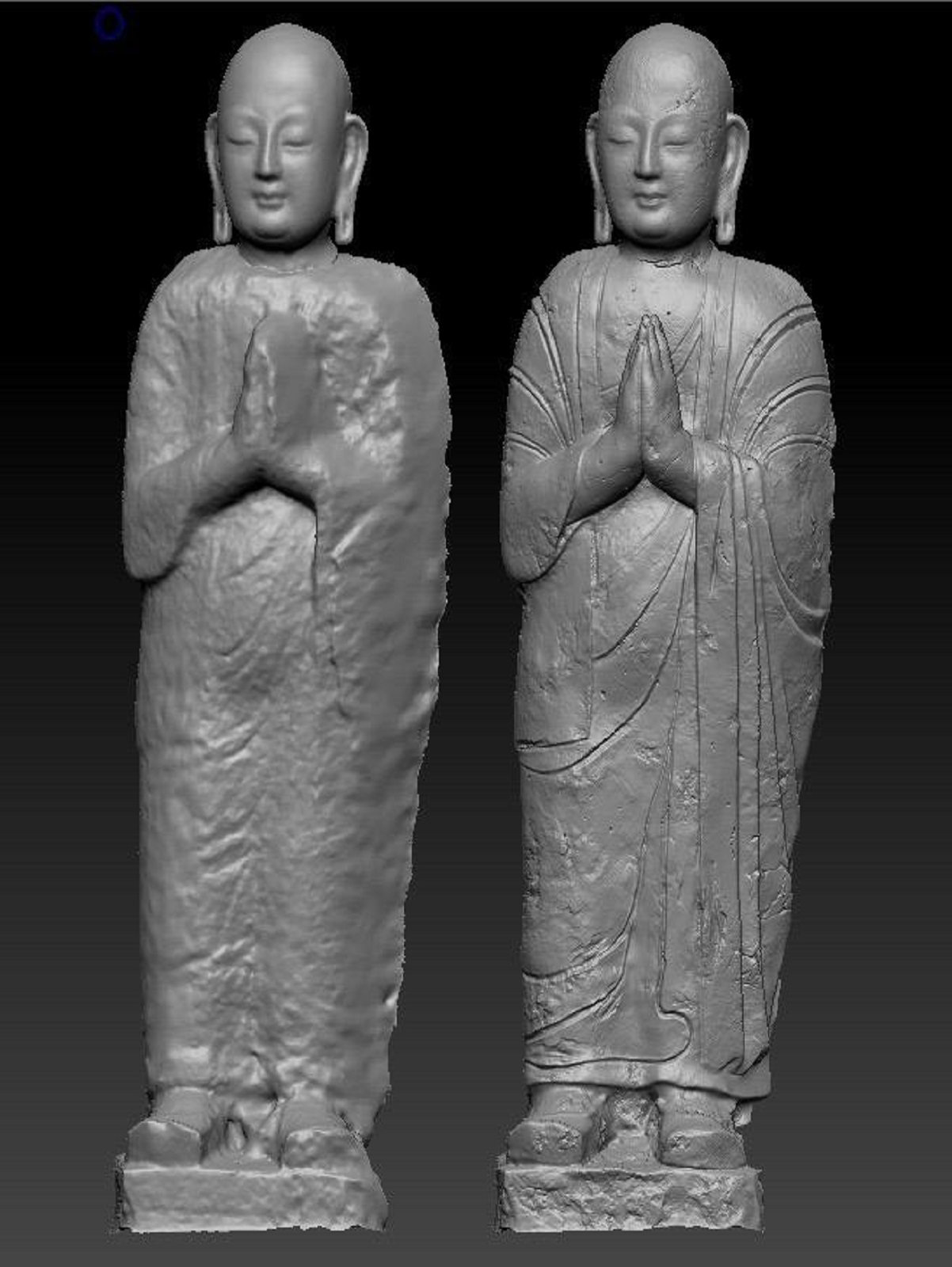
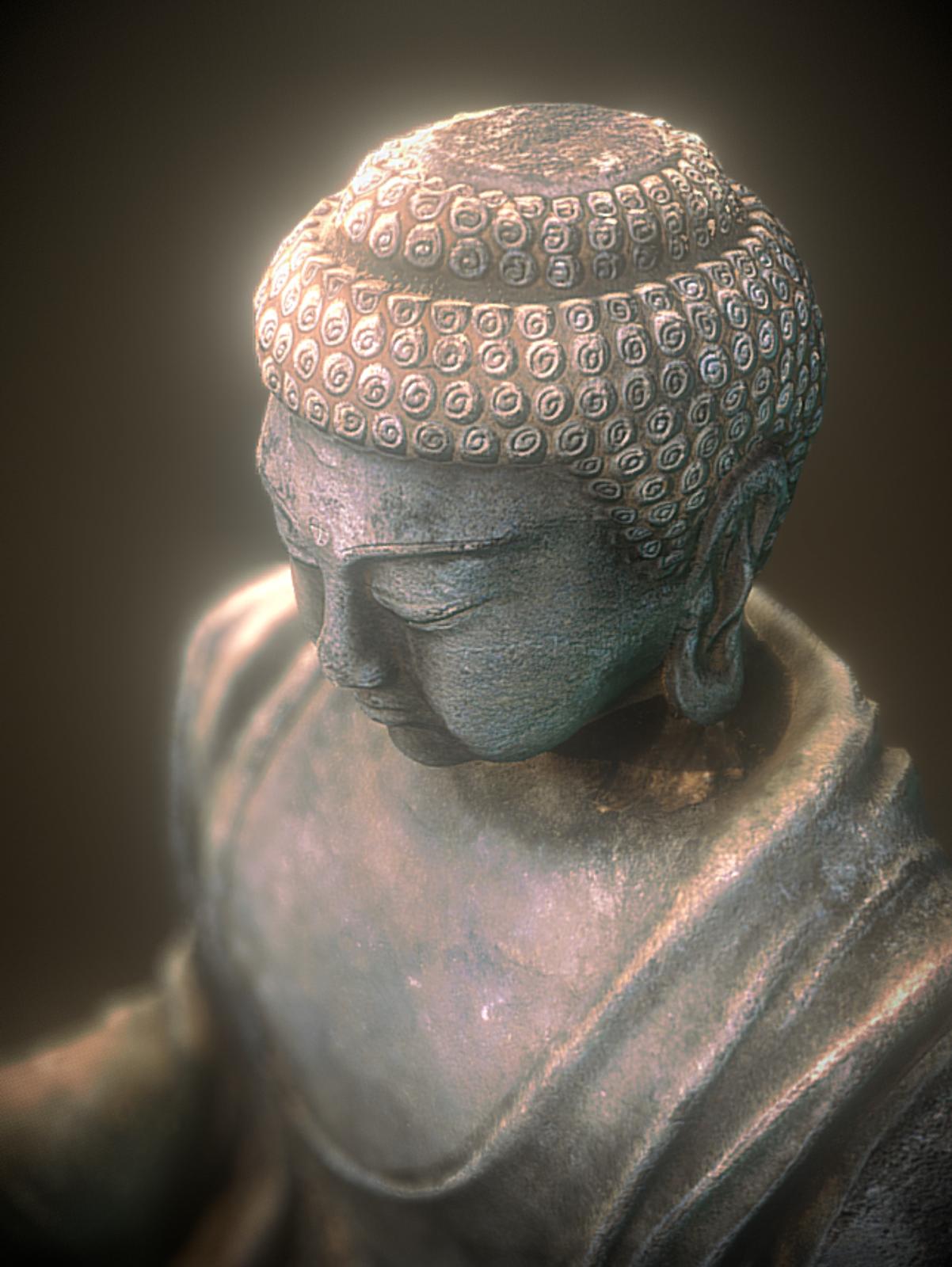
In the collaboration project, Eddy integrated artificial intelligence into the workflow, the project blends AI and virtual reality technologies to enhance photogrammetry and precise data re-measurement, capturing the authentic colors and proportions of the statues on the central pillar.(Photo courtesy of Eddy Hui)
Inevitably, as AI develops at neck-breaking speed, it makes mistakes.
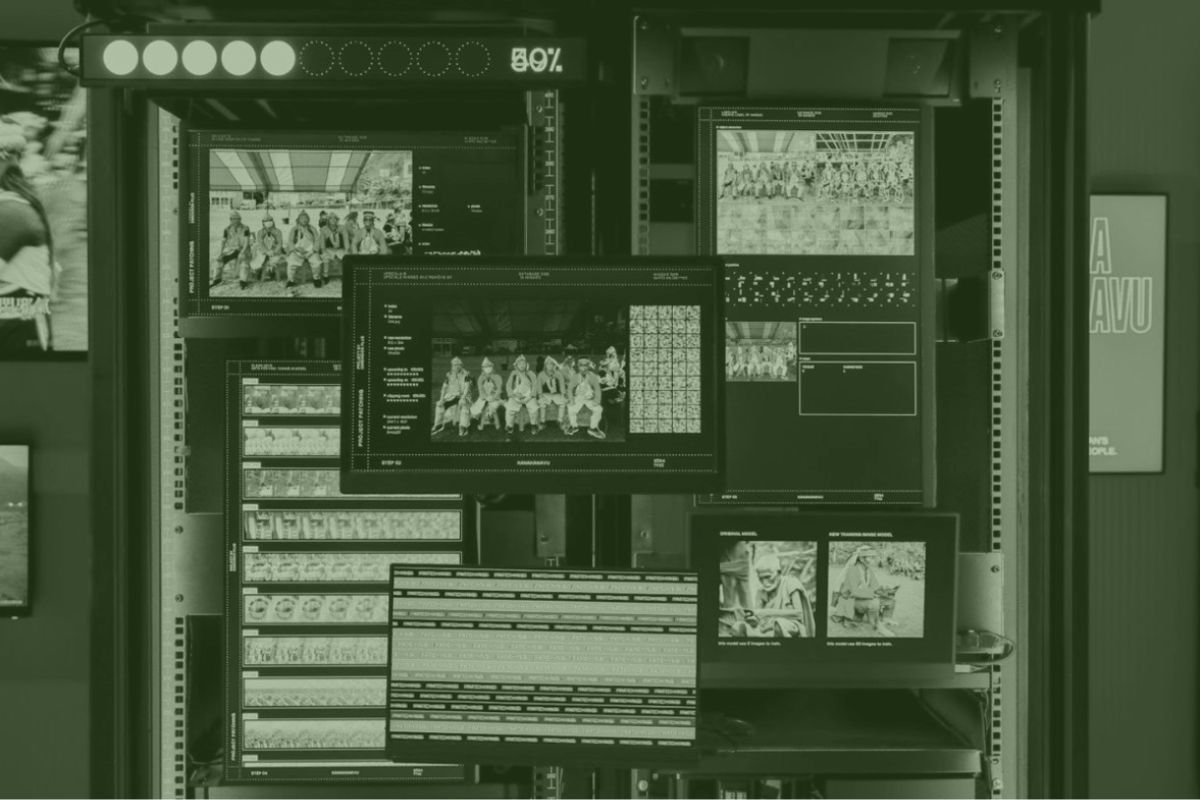
Keith mentioned that his arts tech team Dimension Plus undertook “Project Patching” in 2024. “Patching means to patch up bit by bit. A few years ago, when we began working with AI, we became aware of its many biases.” Keith explains that the databases for mainstream AI usually come from a single origin, such as the USA.
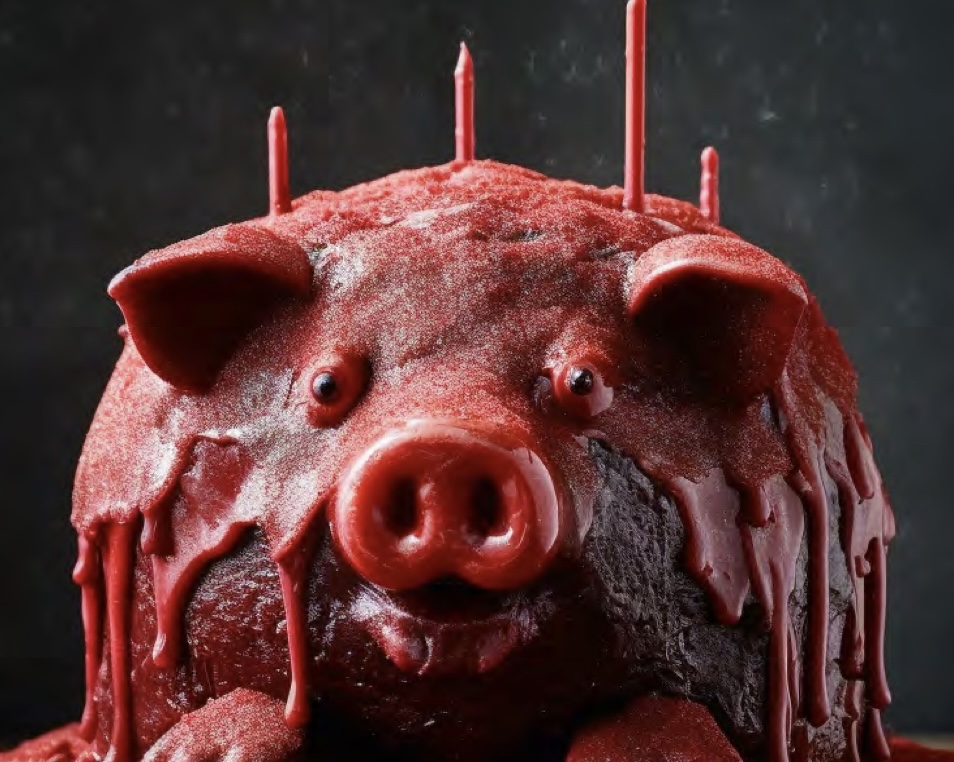
Recalling a funny instance, AI would directly translate Taiwanese black pudding into “Pig’s blood cake” and generate an erroneous image of a “western pig-shaped cake dipped in blood”.
(Photo courtesy of Keith Lam)
Project Patching began complementing AI’s information on Taiwanese black pudding. Later on, it took it further by training and rectifying AI images on the Taiwanese indigenous tribe of Kanakanavu. “We trained good generation models and donated them to Stable Diffusion, an AI model. This removes the stereotypes when it comes to the Kanakanavu tribe. Meanwhile, ChatGPT and Gemini still retain the stereotypes when generating images of the tribe.”
In response, Eddy chuckled and said that if he had inputted the Taiwanese dish “Three-cup Chicken”, AI would generate three cups and three chickens. He therefore believes that the world is still much in need of humanistic values and culture. “These days, digital humanities and the humanities are starting to be treated seriously.” Earlier, Eddy took part in a workshop with primary school teachers and students, exploring the community challenges at To Kwa Wan. Most students thought that AI and robotics would be able to solve challenges like waste, traffic and an aging population. He said that it is very important to mentor the next generation when they are becoming so confident in AI.

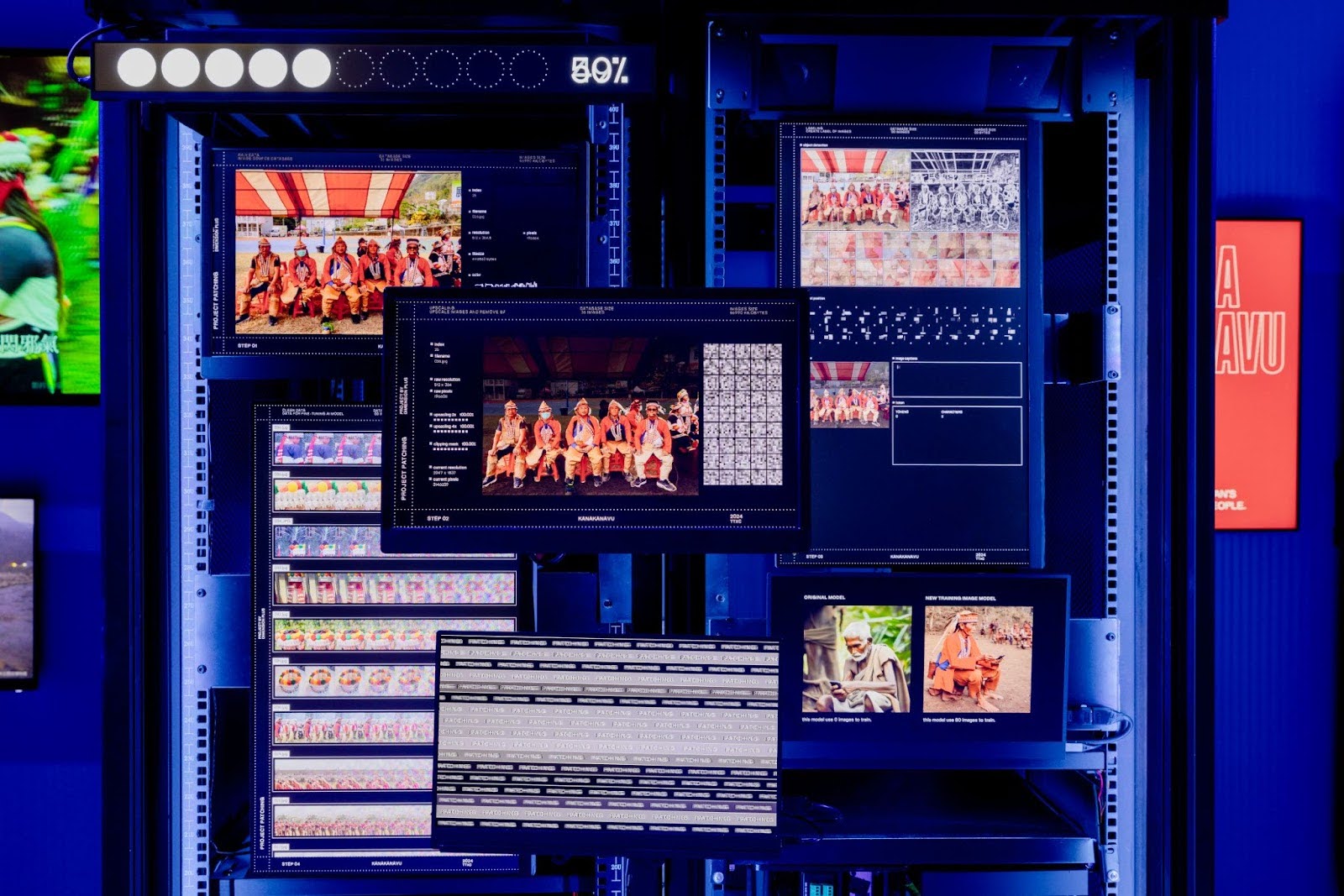
Dimension Plus undertook “Project Patching” in 2024, it aims to address historical and representational biases by reestablishing data from different cultural contexts, such as training and rectifying AI images on the Taiwanese indigenous tribe of "Kanakanavu". (Photo courtesy of Keith Lam)
Setting clear boundaries
Eddy continued, “I think to the three of us, AI has far exceeded being a tool. It may be more akin to an ecosystem, a species, perhaps even a creative field.” Speaking of these conceptual shifts, Keith said he has read many books on the relationship between AI and “cognitive outsourcing”. He believes, "proactive outsourcing" is actually a good thing – When a person keeps thinking and planning out tasks, AI becomes a helpful assistant, instead of a “complete replacement of one’s own brain”.
Setting healthy boundaries is always the best strategy. Eddy points out that in education, instructors and teachers need to guide students correctly, setting clear boundaries for their use of AI. He has seen students input the whole coursework instructions into Gemini and have AI generate the whole process, from draft sketches and essays to report presentations.
In the face of this phenomenon, how should PMQ Seed’s instructors guide students when running their workshops? Eddy raised an example: he once held an anime workshop where participants were asked to sketch a storyboard draft. “Even if they weren’t good at sketching, they must at least draw simple matchstick figures. This allows me to see their formulation of the storyboard, rather than their reliance on AI. From ideation to drawing, at which step should AI be allowed? The instructor must draw the line.”