
Design Feature #68
Be water, Be furniture Home Ecology – The Philo Modular System
TOUN 亠
Text & Image: Chan Kit
Translated by Joel Wong
Samuel can’t forget that IKEA cabinet he kept for years: “It witnessed me moving out to live on my own, then moving in with my partner. Inside, there were thick stacks of design sketches and many slices of life."
Samuel planned to move the cabinet to his new place and keep using it. He tried everything, but ultimately, space limitations prevented him.
He couldn’t find a good spot and had to let it go. What he threw away wasn’t just a piece of furniture. “It felt like tossing out a part of my own memories.” Samuel started to wonder: “Could there be a kind of homeware that can stay with us along the way?”
He soon realized the truth wasn’t about the cabinet itself; it was the “system” behind it. There’s a contradiction between furniture and the living environment—that’s hard to understand at times.
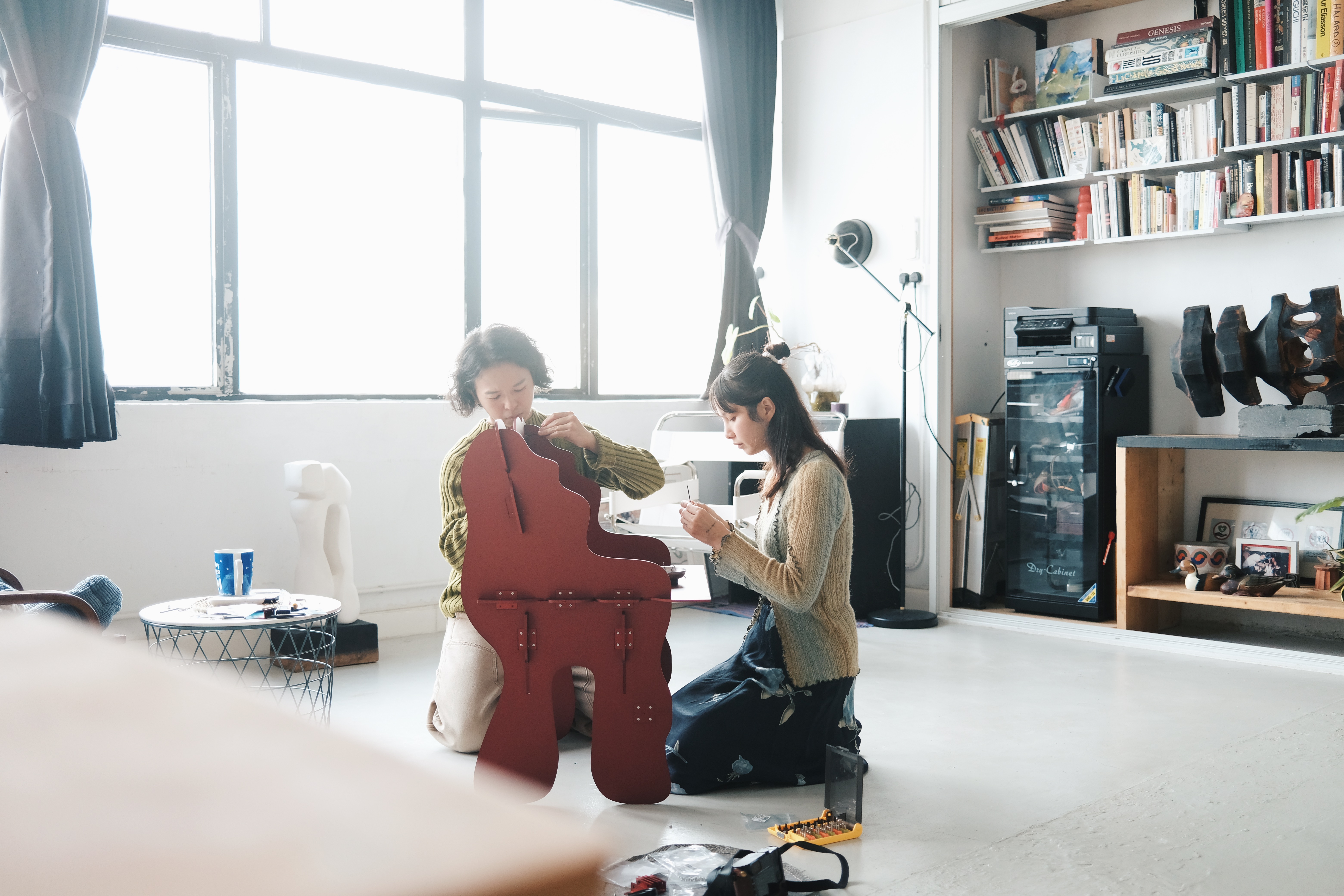
Samuel works as an art director and has created photo props for various fashion magazines. His wife, Renee, is a fashion photographer. The two complement each other and have produced many creative works together.
For example, a stool with intentionally overextended legs serves as an allegory for the monstrosity of the education system. They have also designed various types of sofas, using straightforward furniture language to express emotional states such as fear, anger, and melancholy.
Years of practice quietly planted seed: furniture can be built by your own hands, customized to your needs and ideas. It doesn’t have to be standardized.
But the bigger shock was the hidden waste in the industry: photo props are naturally short-lived. The images remain; the objects are discarded. Sometimes, after a month of careful craftsmanship, the piece disappears once the shoot ends.
“Every piece has a bit of soul in it.” Samuel still remembers rushing overnight to finish a prop, only to doze off from exhaustion—and then feeling his skin burning. He’d been scalded by hot glue.
“What am I doing? What’s going on?” The pain woke him. To protect his body and mind from further burnout, maybe it was time to change.
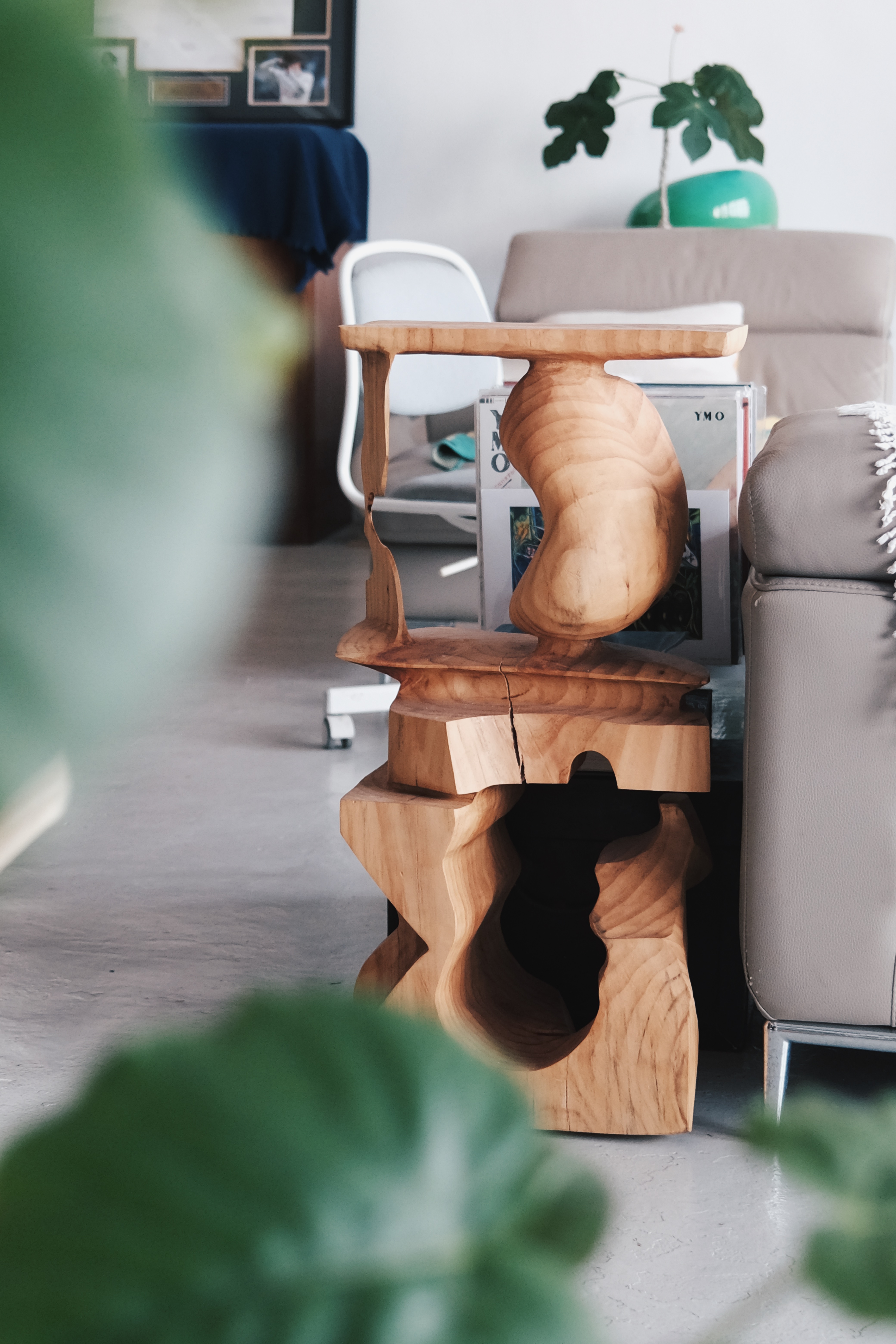
A few years ago, they left their original careers to take sculpture classes at the Hong Kong Visual Arts Centre. Beyond techniques, display methods, and perspective, they began experimenting with materials they hadn’t often used before — wood, stone, and metal — abandoning temporary materials like paper clay, plaster, and plastic tubing.
They call their work art furniture and founded TOUN 亠, guided by the idea of being 60% practical and 40% playful. “Playfulness is like seasoning; without it, you will just be stuck in a rut,” Samuel adds. They once served magazine editors and models; now, they focus solely on the needs of real users—shifting from fabricated fashion scenes back to the real world.
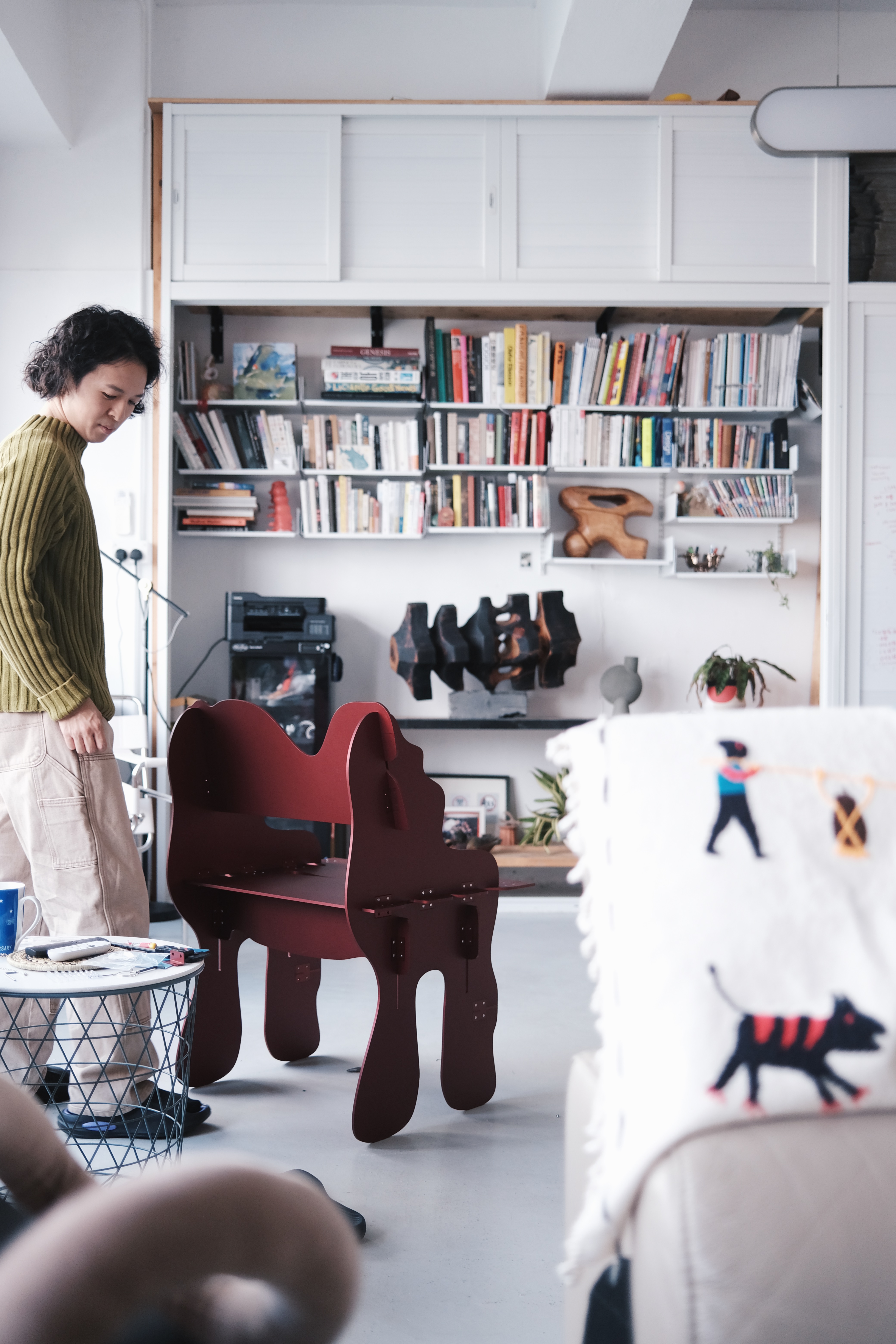
Where photos used to be the primary medium for expressing creativity, they can now finally let their work speak. It lasts longer than photo props and is more sustainable.
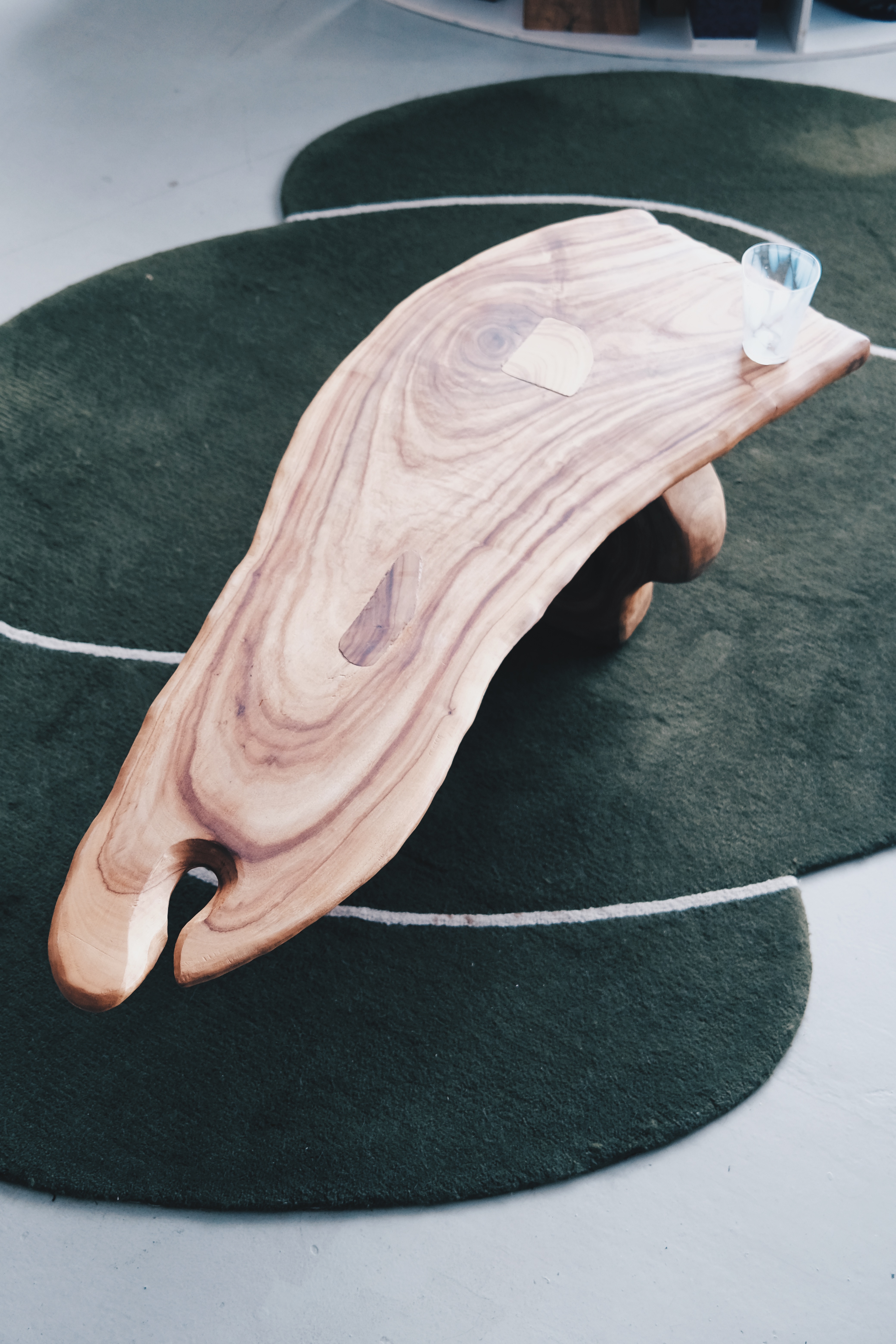
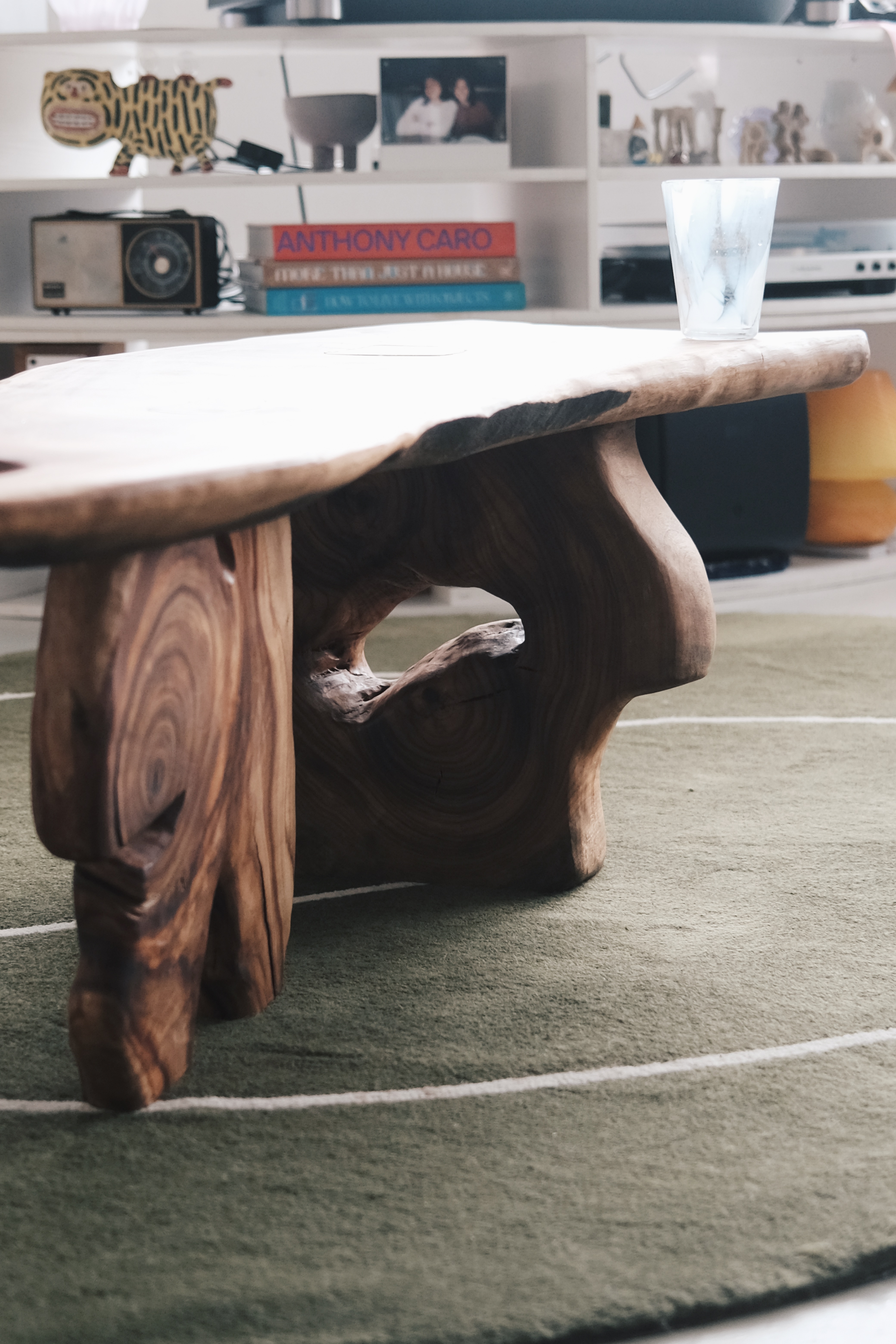
Their first piece was a tea table carved from camphor wood—organic and rugged—assembled from three pieces of timber purchased at Chi Kee Sawmill & Timber.
After a series of wood carvings, they moved on to metal works: a kitchen shelf made from eight lightweight aluminum panels. It looks like building blocks—interlocking with protrusions and recesses. The benefit is that each panel is a separate piece, making it easy to customize in tight spaces. They even left spots to hang wine glasses upside down and place hand soap—fun yet practical.
Because each aluminum panel is a basic unit, they can be swapped with others if needed, offering greater flexibility than traditional designs.
This experimental piece served as the prototype for The Philo Modular System—an expandable design meant for sharing. Samuel describes it as furniture with its own language: “So it can ‘communicate’ with all users.”
Imagine each module like Transformers—it can transform into tables, chairs, bookshelves, or display cabinets as needed, adjusting its length and height at will. When you move to a new space, you can break it down to zero and rebuild it, creating a fresh combination and look that fits in with your new home.
If Bruce Lee’s motto “Be water” had a furniture version, it might just be this: fluid and nimble, unbound by constraints.
This design was expanded to 50 aluminum panels for this year’s deTour Design Festival and presented as Home Ecology – The Philo Modular System. Still, they open everyday life to the possibility of sustainability.
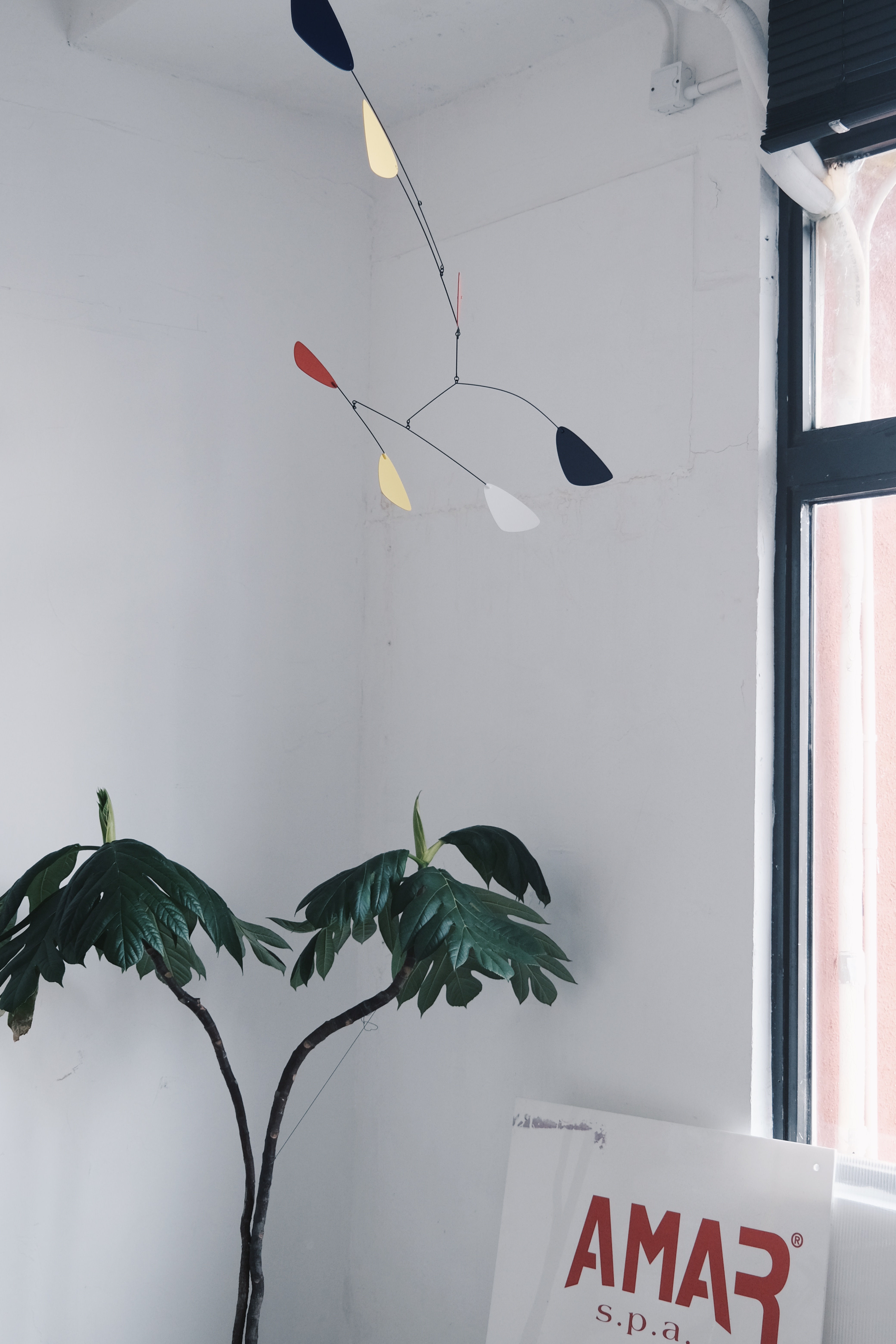
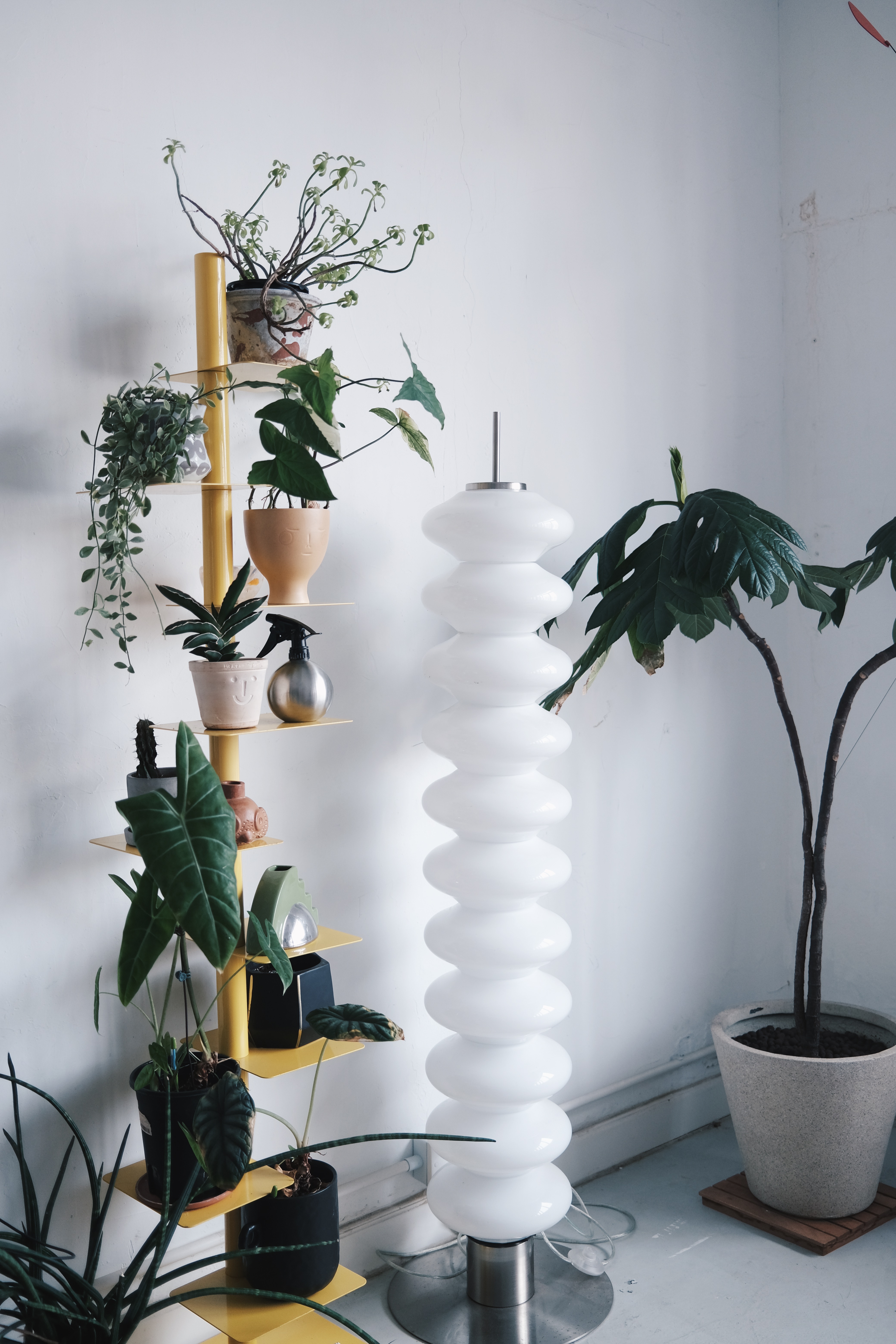
Samuel and Renee’s studio is filled with plants; they’re used to being surrounded by greenery. The inspiration for Philo also comes from the leaf—it knows how to sprout, grow, spread, and prepare for rebirth after withering.
It definitely sounds poetic, but perhaps this suggests a direction for future homeware design—especially as Earth’s available resources continue to decline and we enter an era where desires and values are shifting.
TOUN 亠 challenges the traditional idea of home, which is no longer tied to a fixed location but is portable—a sustainable lifestyle. For example, a cat person could use modules to build perches and pathways for their feline’s needs, while plant lovers could easily create a flexible gardening corner at home.
When furniture seems to come alive—no longer just passive or one-time use—it might be helpful to create a new everyday experience.
"The TOUN 亠 team is looking forward to hearing from the people who get to own something from Philo — let us know what kind of relationship they’ve built with it.”
deTour 2025 – design festival
The Shape of Yearning
Date|2025.11.28 - 12.07
Time|11:00 - 20:00
Venue|PMQ
Detail |https://main.detour.hk/en-us